
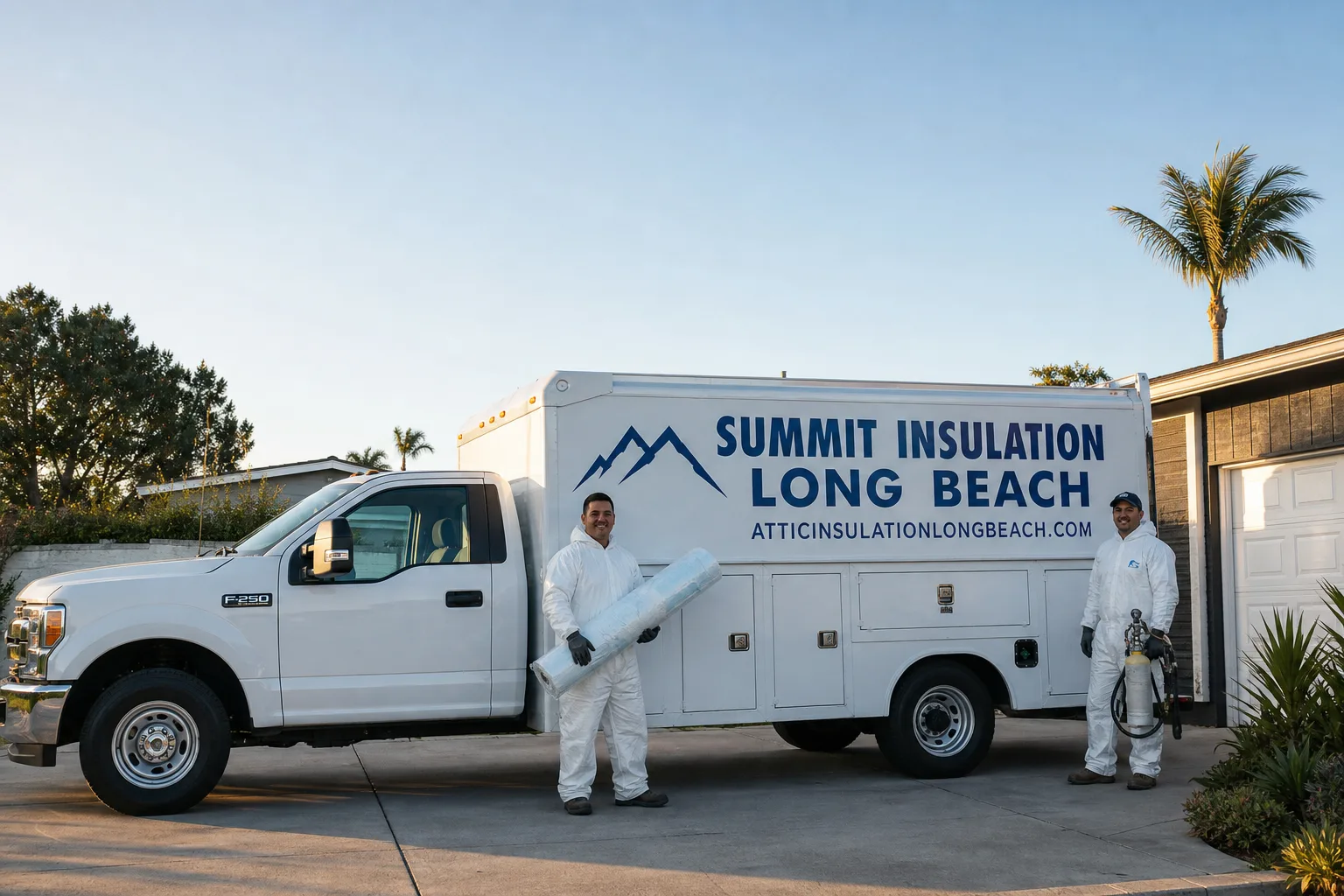
Trusted Attic Cleaning & Rodent Proofing for Long Beach Homeowners
Attic Cleaning & Rodent Proofing pricing in Long Beach typically ranges from $1,200 to $3,800 depending on attic size, contamination level, and the extent of exclusion work needed. Most jobs are completed in one to two days, and the difference afterward is immediate: no more scratching overhead at night, no more droppings in your insulation, and air that doesn’t carry the stale smell of rodent waste through your ceiling. Nate Calloway, owner and lead installer at Summit Insulation Long Beach, has worked in attics across Naples, Belmont Shore, Bixby Knolls, and the Wrigley district long enough to know that Long Beach’s mild coastal climate creates year-round rodent pressure, not just a winter problem.
We handle the full job: removal of contaminated material, sanitizing, exclusion, and fresh insulation. Call (562) 784-9031 for a free estimate, and we can usually get a technician into your attic within 48 hours.
Key Takeaways:
- Rodent proofing in Long Beach requires addressing both the attic interior and the exterior entry points, especially roof-to-wall transitions common in 1920s-1950s Spanish and Craftsman homes.
- Contaminated insulation must be removed before new material goes in, otherwise you’re insulating over active waste and odor.
- Summit Insulation bundles cleaning, exclusion, and re-insulation under one crew, no handoffs to pest control companies or general contractors.
- Free estimates include a full attic inspection with photos so you see exactly what we see.
What Our Attic Cleaning & Rodent Proofing Service Includes
This isn’t a surface-level vacuum job. When rodents get into an attic, they nest in the insulation, defecate throughout the space, and chew through wiring, ductwork, and framing. Cleaning without proofing means they come back. Proofing without cleaning means you’re sealing in the contamination. We do both, in the right order, and we install new insulation only after the space is clean and sealed.
Attic Cleanout
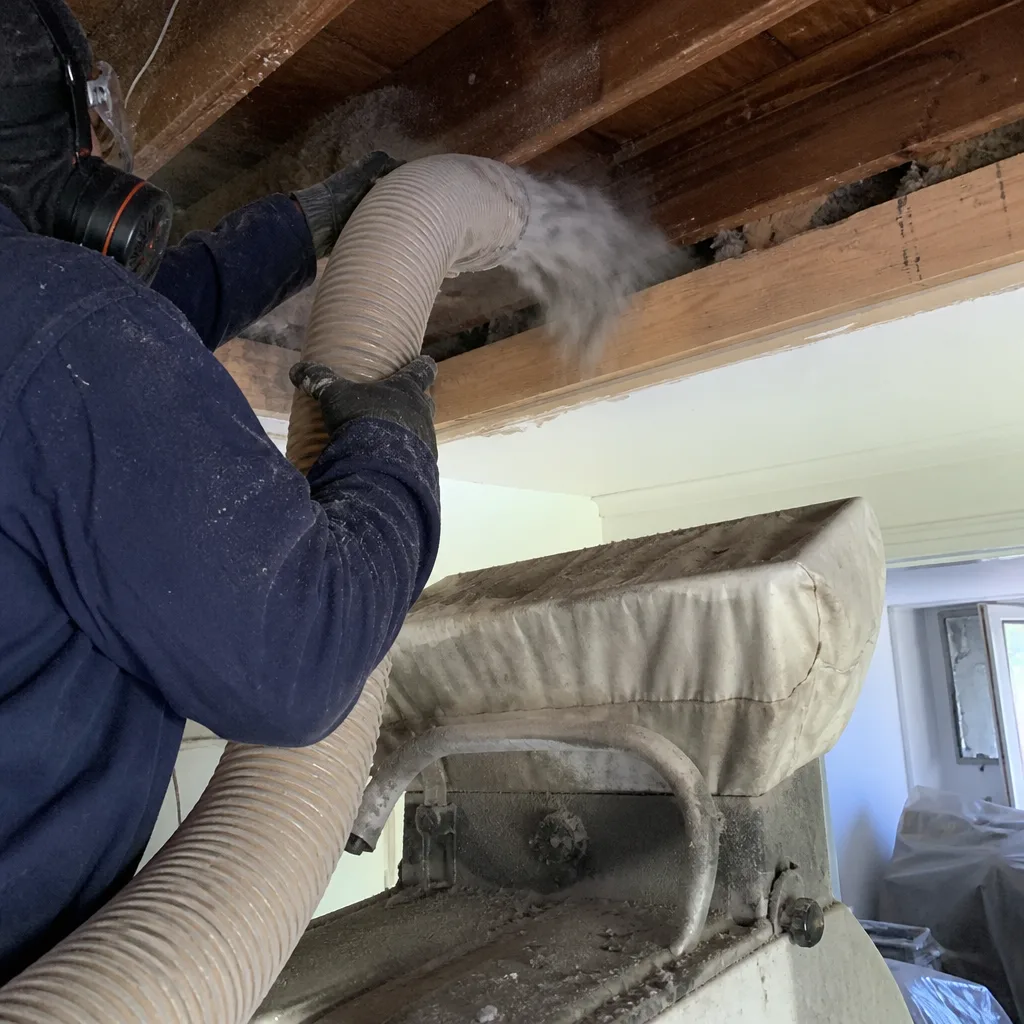
This is the removal of all contaminated insulation, rodent nesting material, droppings, and accumulated debris from the attic floor and cavities. In Long Beach homes built before 1980, we often find layers of old fiberglass batts mixed with raccoon or rat nests, sometimes with blown-in cellulose compacted on top. We use commercial HEPA-filtered vacuums and hand removal methods appropriate to the attic’s construction, avoiding damage to recessed light housings, HVAC ducts, and bathroom fan boxes. The goal is a substrate that’s actually clean, not just visually tidied.
Attic Sanitizing & Decontamination
After the physical debris is out, we treat the affected surfaces with an antimicrobial and enzyme-based decontaminant that breaks down the bacteria left by rodent urine and feces. This step matters because rodent droppings can carry hantavirus, leptospirosis, and salmonella, especially in enclosed attic spaces where dust gets pulled into the home through ceiling penetrations. We fog the space thoroughly and wipe down accessible framing. The decontaminant we use is effective against odor and biological residue, and it’s safe for the home’s occupants once dried.
Rodent Proofing & Exclusion
Exclusion is the part that keeps the problem from repeating, and it requires understanding how rodents actually enter Long Beach attics. Rats climb stucco walls, squeeze through gaps as small as a half-inch, and follow utility lines from the alley into the eaves. Mice exploit even smaller openings around plumbing vent pipes and electrical masts. We seal identified entry points with rodent-proof materials: galvanized steel mesh, metal flashing, and exclusion foam rated for pest resistance. We address both obvious gaps and the subtle ones: the gap where the roof deck meets the fascia board, the opening around the AC lineset, the unscreened gable vent facing the alley. Inspection happens from both inside the attic and from the roofline, because entry points visible from one side are often invisible from the other.
Attic Restoration
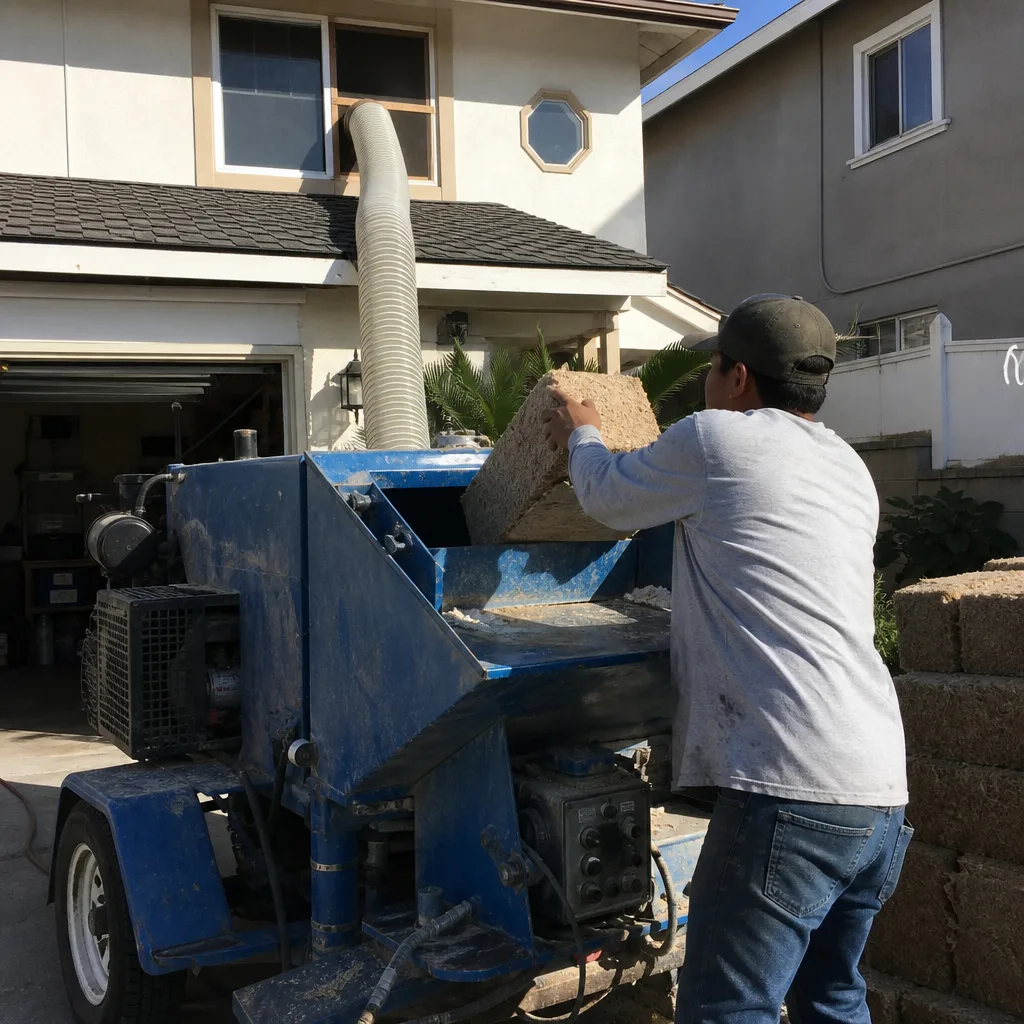
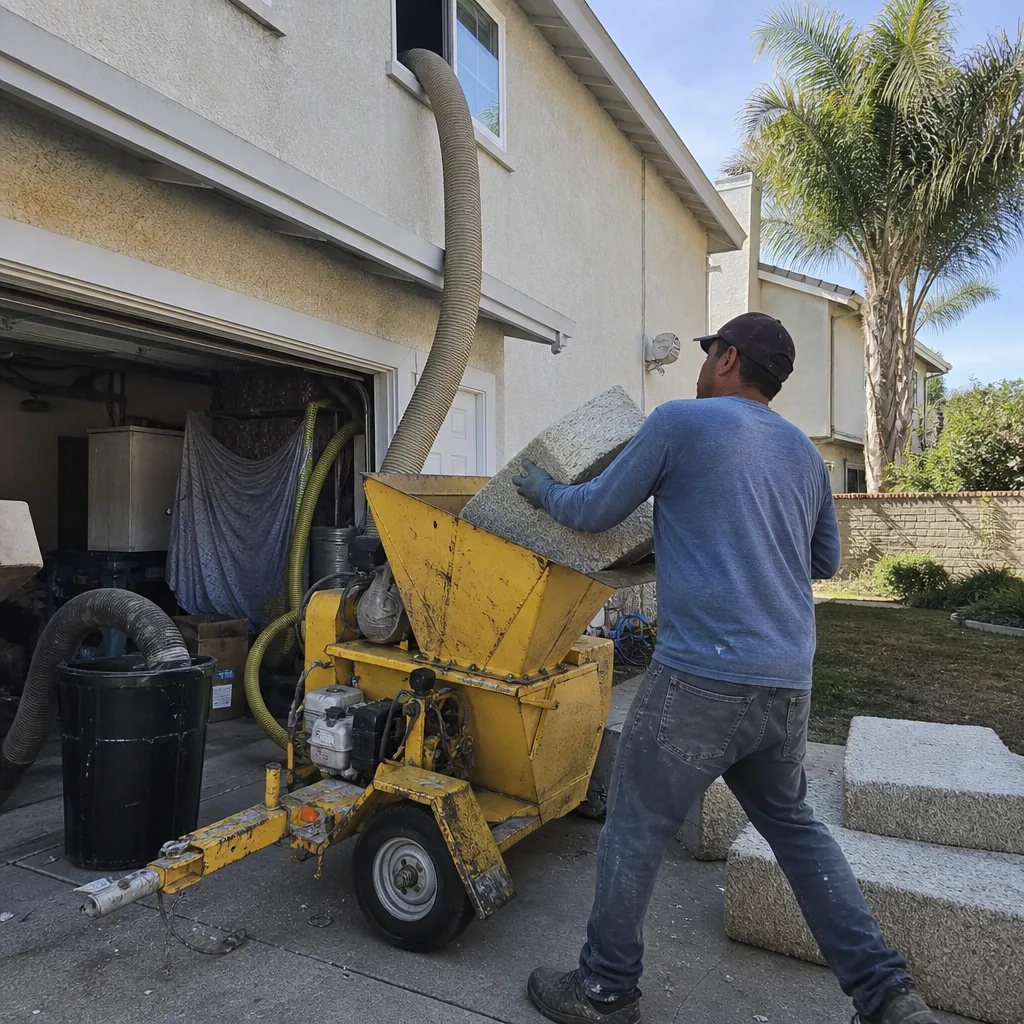
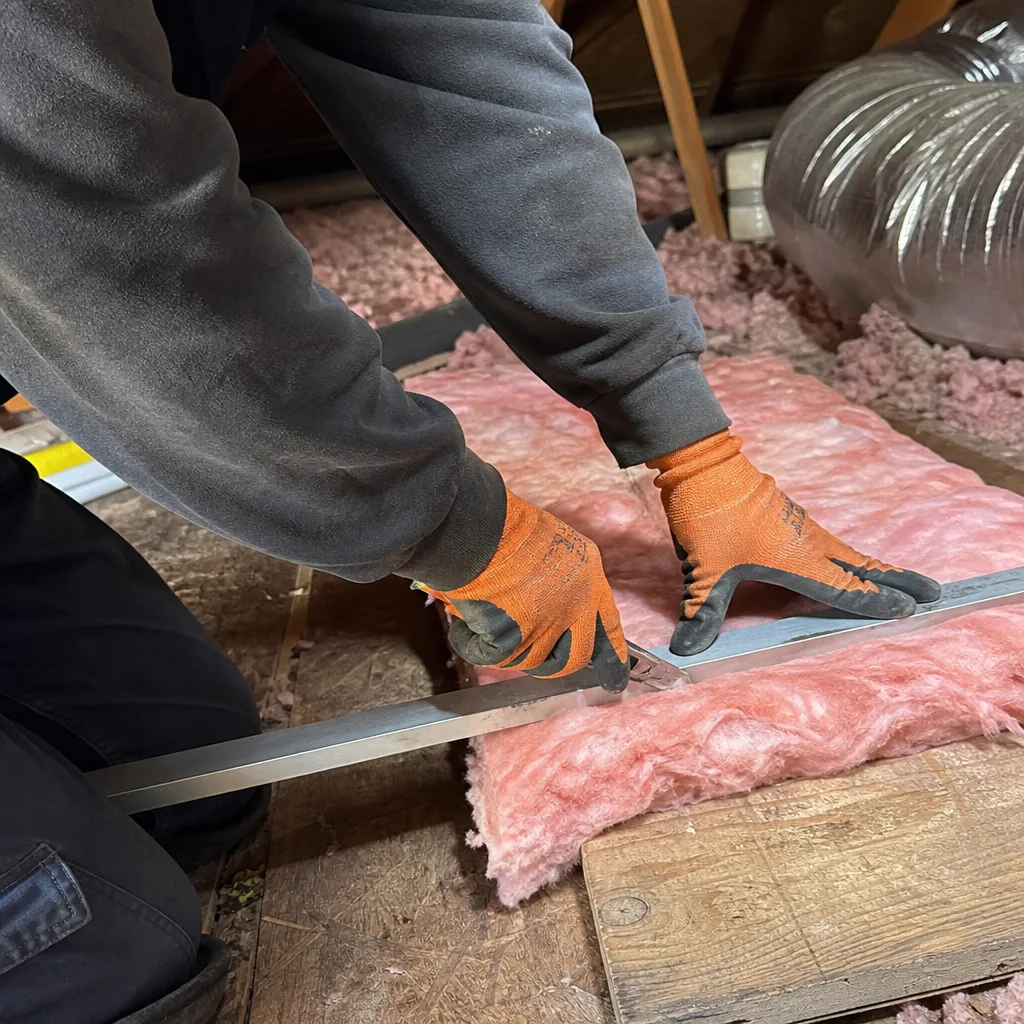
Once the attic is clean and sealed, we restore the space to proper condition, which usually means installing new insulation to replace what was removed. Rodent-damaged insulation loses most of its thermal value, so this step isn’t optional if your energy bills have crept upward alongside the pest problem. We’ll recommend the right material for the application, whether that’s blown-in fiberglass from Owens Corning or Knauf, cellulose from GreenFiber, or closed-cell spray foam from Icynene or Demilec where sealing and insulation must happen in one pass. The attic gets a fresh start: clean decking, sealed penetrations, and insulation that actually performs.
What happens when you call
- 1
A real person answersNo phone trees — you reach a local pro.
- 2
You get an upfront price rangeHonest numbers before anyone is dispatched.
- 3
A background-checked tech heads outLicensed & insured, dispatched right away.
- 4
You approve before work beginsNothing starts until you say go.
Why Attic Rodent Problems Are Different in Long Beach
Long Beach has a specific set of conditions that makes attic intrusion common and persistent. The city’s housing stock skews older, with a large share of homes built between 1920 and 1960. These are well-built structures, but seven or eight decades have opened gaps at rafter tails, roof-to-wall transitions, and around chimneys and plumbing stacks. Combine that with the Port of Long Beach, the Los Angeles River corridor, and a dense urban tree canopy stretching from the Wrigley district through Los Altos and up toward Signal Hill, and you have an ideal environment for roof rats (Rattus rattus), which are the dominant attic pest in this part of Southern California. Roof rats are agile climbers and don’t need much of an opening, and they breed year-round in Long Beach’s mild climate rather than seasonally like they do in colder regions.
What this means in practice: attics in Long Beach aren’t a set-and-forget space. They’re a semi-exposed cavity that requires a deliberate seal-up strategy, especially around the eaves and the gable ends facing mature ficus and magnolia trees. The homes along the canals in Naples and Belmont Shore see additional pressure from roof rats nesting in nearby palms. A rodent proofing job in Long Beach needs to be more thorough than one in a drier, newer inland suburb, because the rodent pressure is higher and the building details are more varied.
Brands We Service for Attic Cleaning & Rodent Proofing
When we restore an attic after cleaning and exclusion, the materials we install come from a defined set of manufacturers, not whatever the supply house has on sale. Our work routinely involves Owens Corning fiberglass, which is a dependable choice for open attic floors and re-insulation after a cleanout. We’ve used their blown-in systems in attics across Lakewood and Bellflower where the existing insulation was so badly contaminated that a full removal and fresh install made more sense than a targeted patch.
For attics that need air sealing and insulation in one step, we use Icynene and Demilec spray foam products. These materials work well in the complex roof geometries common in Long Beach’s older homes, where batts alone leave gaps at rafter bays and around vent pipes. And for attics where the homeowner wants a lower-cost, high-coverage option, GreenFiber cellulose gives us a dense-pack product made from recycled material that fills cavities more completely than standard batts. We match the product to the condition of the attic, not the other way around. Whether you have existing insulation from any brand, or the attic is bare decking, we can help.
Signs You Need Attic Cleaning & Rodent Proofing Right Now
- Scratching, thumping, or running sounds in the ceiling, especially between dusk and dawn. Roof rats are nocturnal, and their activity peaks right after sunset and just before sunrise. If you hear noises in the attic around those hours, there’s likely an active nest, not a one-time visitor. The sound source is usually warm insulation cavities near the chimney chase or above the water heater closet.
- Dark, greasy rub marks along beams, rafters, or around the attic hatch. Rats and mice leave body oil trails along the routes they travel repeatedly. These marks look like smudged dirt but don’t wipe off easily. Once you see them, the traffic pattern is established, which means the animals are treating your attic as a permanent home, not a layover.
- Droppings in the attic, around recessed lights, or concentrated in one corner near the eaves. Roof rat droppings are about a half-inch long with pointed ends. Mice droppings are smaller, about a quarter-inch, with pointed ends as well. Either type near wiring means the animals have been active around electrical runs, which is a fire-safety concern and a code concern when you sell.
- A stale, ammonia-like odor that gets stronger when the AC or heater runs. Rodent urine crystallizes and the ammonia compounds get pulled through ceiling registers, light fixtures, and any gap between the attic and living space. The smell isn’t just unpleasant, it’s evidence of active or long-standing contamination that won’t resolve without removal and decontamination.
- Insulation that looks trampled, flattened, or tunneled through when you peek into the attic. Rodents compress insulation to create nests and routes. The R-value of the material drops significantly when it’s matted down, so your thermal envelope is already degraded. If the insulation looks disturbed, you need a full cleaning and fresh material, not just a pest trap.
Our Attic Cleaning & Rodent Proofing Process — Step by Step
- 1
Full attic assessment. We start with a complete inspection of the attic interior, documenting the insulation condition, contamination level, entry points, and any damage to wiring, ducting, or framing. You get photos so you’re never taking our word for it. This assessment also feeds directly into whether a home energy audit is a smart next step, since rodent damage and air sealing issues usually overlap.
- 2
Removal of contaminated material and debris. We physically remove the old insulation, nesting material, droppings, and any stored items that have been contaminated. HEPA-filtered vacuums handle the particulate, and we bag everything for safe disposal. If the attic has vermiculite insulation (common in pre-1985 Long Beach homes), we pause and advise on testing for asbestos content before any disturbance, since vermiculite from the Libby mine contains asbestos.
- 3
Decontamination and odor treatment. After the physical cleanup, we apply the enzyme-based decontaminant across the affected surfaces. This step neutralizes bacteria, breaks down the organic residue causing the odor, and creates a surface that’s safe to work on. We also fog the space so the treatment reaches into cavity corners and around truss webs.
- 4
Exclusion and sealing of entry points. We seal every identified opening with steel wool, galvanized hardware cloth, metal flashing, and pest-rated expanding foam. This work happens from both the attic side and the exterior side, including gable vents, soffit gaps, roof-to-wall intersections, and utility penetrations. A proofed attic is one where the rat can’t get back in, no matter how determined.
- 5
Fresh insulation and final inspection. Once the space is clean, sanitized, and sealed, we install new insulation matched to your attic’s needs and your budget. After installation, we walk the attic with you, when possible, and show you the completed work. You’re not left guessing what got done. You’ll know what was removed, what was sealed, and what went in.
How Much Does Attic Cleaning & Rodent Proofing Cost in Long Beach?
Here’s what we see across Long Beach attics, from a compact bungalow in Rose Park to a sprawling two-story in Park Estates:
| Service | Typical Range in Long Beach |
|---|---|
| Attic cleanup only (no re-insulation) | $1,200 – $2,200 |
| Cleanup + sanitizing + basic exclusion | $1,800 – $3,000 |
| Full cleanout + full exclusion + new insulation | $2,800 – $5,500+ |
| Extensive contamination, multiple entry points, large attic (2,000+ sq ft) | $5,000 – $8,000+ |
What drives cost is attic size, the amount of insulation to remove, how many entry points need sealing, and accessibility. A steep-pitch roof with a tight scuttle access takes longer than a walkable attic with a pull-down ladder. Older homes in Alamitos Beach and Belmont Heights often have multiple roof-to-wall gaps and decades of layered debris, which adds time. We don’t bid by square foot alone because a 1,200-square-foot attic in one Long Beach home can take twice as long as the same footprint in another. Our estimates are itemized, so you see the labor, disposal, sealing, and material lines separately. Call (562) 784-9031 and we’ll walk your attic with you and price it from what we actually see.
Attic Cleaning & Rodent Proofing Near Long Beach — Our Service Area
Summit Insulation Long Beach serves all of Long Beach and the surrounding communities. We regularly work in Signal Hill, Lakewood, Bellflower, Cerritos, Carson, and Paramount. Typical response time for an estimate is one to two days, and emergency attic intrusion work (active rodent entry, water damage from chewed pipes, or visible electrical damage) can often be scheduled within 24 hours. If you’re in Lakewood and noticing attic noises, you can learn more about our work there on the Attic Cleaning & Rodent Proofing in Lakewood page. We also serve the Attic Cleaning & Rodent Proofing in Commerce area for homes closer to the 5 and 710 corridors.
Serving Long Beach, CA — Our Local Coverage Area
We’re based in the Long Beach area and know this community well. Use the map below to see our service coverage — if you’re nearby, we can almost certainly help.
Frequently Asked Questions — Attic Cleaning & Rodent Proofing in Long Beach
Attic cleaning and rodent proofing is the process of removing contaminated insulation and rodent waste, sanitizing the attic surfaces, sealing every entry point that lets rodents in, and then reinstalling clean insulation. It’s not a pest control treatment and it’s not just a vacuum job, it’s a full remediation of the space. For Long Beach homes with older construction and year-round roof rat pressure, it’s the only way to fully resolve an attic rodent problem. Call (562) 784-9031 and Nate will explain what your attic actually needs after seeing it.
Most Long Beach attic cleanouts with basic exclusion take one to two working days. A full cleanout plus comprehensive exclusion plus new insulation can take two to three days, depending on attic size and access difficulty. We schedule the work so you’re not left with an open attic over the weekend; if we start on a Friday, we finish on Saturday. The estimate visit itself takes about 45 minutes, and you get a written quote on the spot.
In Long Beach, expect to pay between $1,200 and $3,800 for a typical attic cleaning with exclusion, with full restoration (new insulation included) running higher, usually $2,800 to $5,500 or more. The variables are attic square footage, contamination severity, number of entry points, and whether the existing insulation can be spot-replaced or needs full removal. Our free estimate gives you a firm number before any work begins. Call (562) 784-9031 for an exact quote, estimates are free and there’s no obligation.
We work with Owens Corning insulation extensively, both in removal and installation. If your Owens Corning fiberglass has been contaminated by rodents, we remove it, decontaminate the space, and can reinstall a fresh Owens Corning product or recommend an alternative from our material lineup like GreenFiber cellulose or Icynene spray foam, depending on what the attic conditions call for. The brand matters less than the application and the condition of the space, and we’ll tell you honestly what works best.
Yes. If you have active rodents in the attic, water damage from chewed pipes, or visible chewing on electrical wiring, call us at (562) 784-9031 and we’ll prioritize your visit. Emergency estimates for active intrusion can often be scheduled within 24 hours. Note that while we can secure entry points quickly, a thorough exclusion job requires the full process, so we’ll stabilize first and schedule the complete work right behind it.
Our exclusion work carries a workmanship warranty, and we’ll put the terms in writing before we start. The material warranty on any new insulation we install comes from the manufacturer, whether that’s Owens Corning, GreenFiber, Icynene, or Demilec. We don’t offer a “lifetime rodent guarantee” because no honest contractor can promise that a determined rat won’t find a new opening in a 1940s roof deck, but our sealed entry points are built to last and we stand behind the quality of the installation.
Clear the attic access area in your home, usually a hallway or closet, so our vacuum hoses and bagged debris can move through without obstacles. If you have items stored in the attic that you want to keep, remove them before we arrive or tell us during the estimate so we can discuss handling. Keep pets out of the access room while we work, and expect some noise and odor during the decontamination step, which dissipates within a few hours. We handle all disposal and cleanup, you don’t need to provide anything.
Schedule Your Attic Cleaning & Rodent Proofing Service in Long Beach Today
If rodents have been using your attic as a home, every week of delay means more contamination and more damage to your insulation and wiring. Call (562) 784-9031 today for a free estimate. Nate Calloway, owner and lead installer, will inspect your attic personally and give you a straight answer on what needs to be done and what it costs. No subcontractors, no commission-based sales pitch, just a clear plan to get your attic clean, sealed, and properly insulated.
Written by Nate Calloway, Owner at Summit Insulation Long Beach, serving Long Beach, our Attic Cleaning & Rodent Proofing in Carson, and surrounding communities since 1987.