
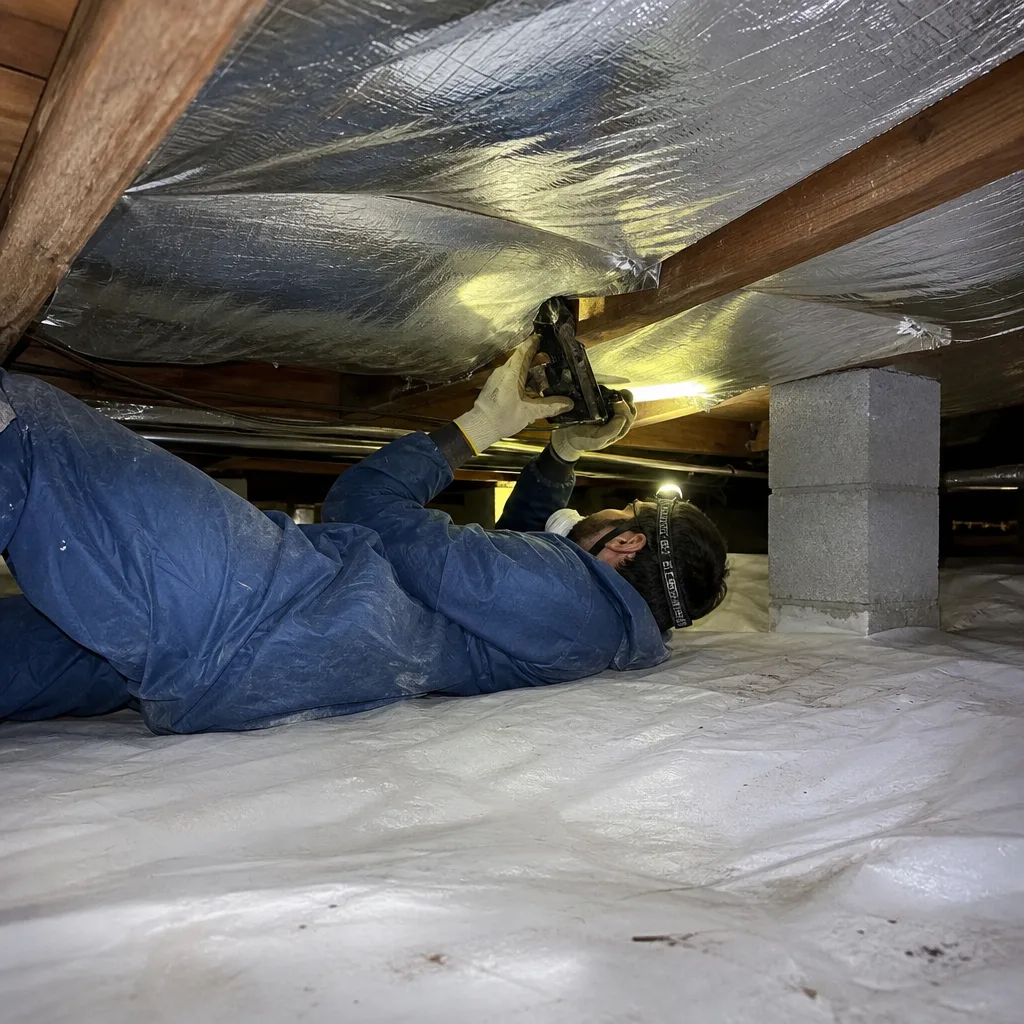
Fast, Reliable Crawl Space Encapsulation & Vapor Barrier Across Santa Fe Springs
Crawl space encapsulation in Santa Fe Springs usually means working around older buildings, not newer homes. Most calls we take here involve 1950s–70s warehouses and light-manufacturing shops where the original vapor barrier has failed or was never installed correctly in the first place. If you’re dealing with a damp, musty crawl space under a commercial building or a tract home off Telegraph Road, you’re not chasing a mystery: it’s a moisture and air-sealing problem with a fix. Summit Insulation Long Beach handles crawl space encapsulation, vapor barrier installation, and moisture control for Santa Fe Springs property owners, and we’re usually on site within two business days. Call (562) 784-9031 for a free assessment.
Why Summit Insulation Long Beach Is Santa Fe Springs’s Preferred Crawl Space Encapsulation & Vapor Barrier Company
We walk the odd stuff. Most insulation crews show up in Santa Fe Springs expecting residential attics. We expect what’s actually there: tilt-up concrete buildings, 1950s-era galvanized ductwork, dirt floors under office additions, and pipe insulation nobody wants to touch. Nate Calloway, our owner and lead installer, runs every job himself. That means the person quoting your vapor barrier work is the same person sealing the seams and taping the butyl joints. No rotating subcontractors, no hand-offs.
We’ve done crawl space work near the 605 and 5 interchange for years. The buildings there are consistent in their problems: shallow crawl spaces cut into heavy clay, old 4-mil poly that’s torn and curling at the edges, and condensation from chilled-water pipes that shouldn’t be inside a warm humid void. Our Crawl Space Encapsulation & Vapor Barrier team knows how to remediate these spaces so they pass inspection the first time. We also know when to call in an asbestos abatement contractor before we touch anything. That’s the kind of local knowledge that saves a building owner from a failed inspection and a second invoice.
Our Crawl Space Encapsulation & Vapor Barrier Services in Santa Fe Springs
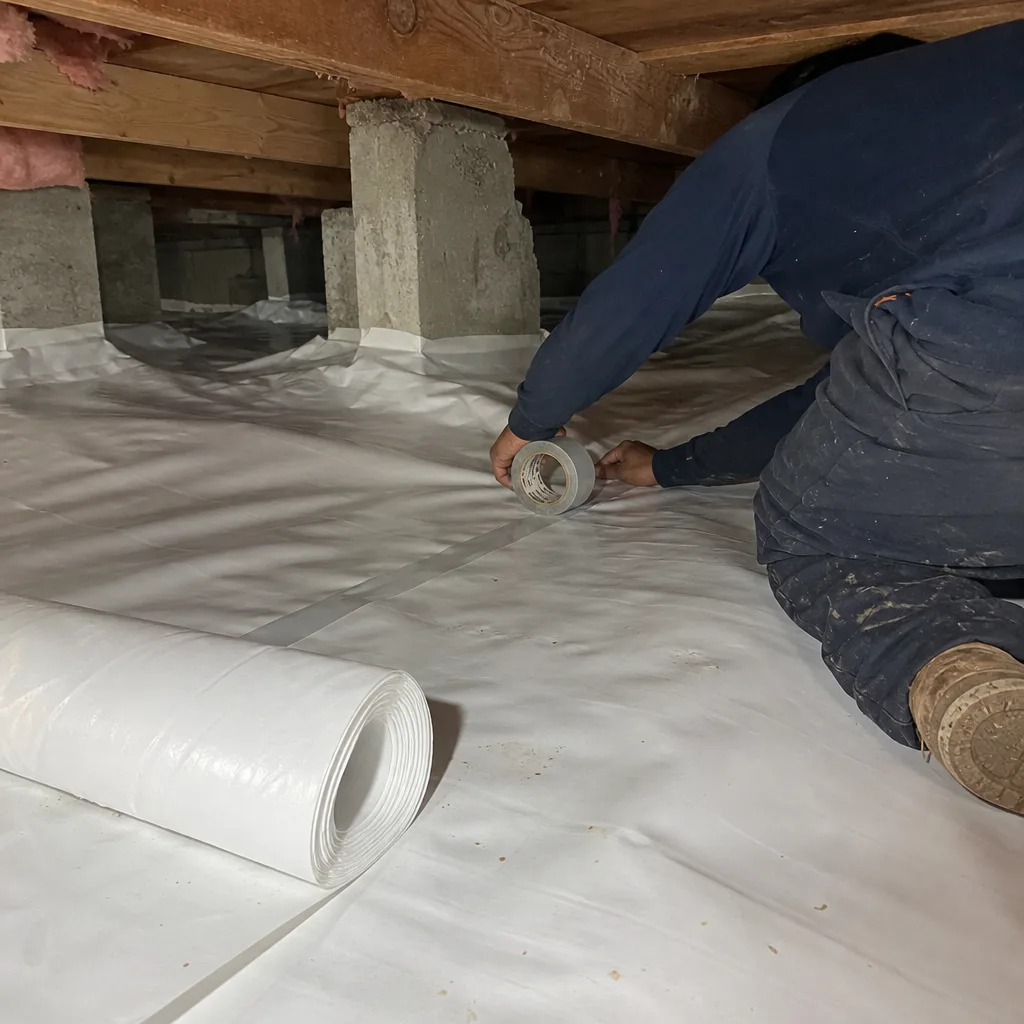
Crawl Space Vapor Barrier
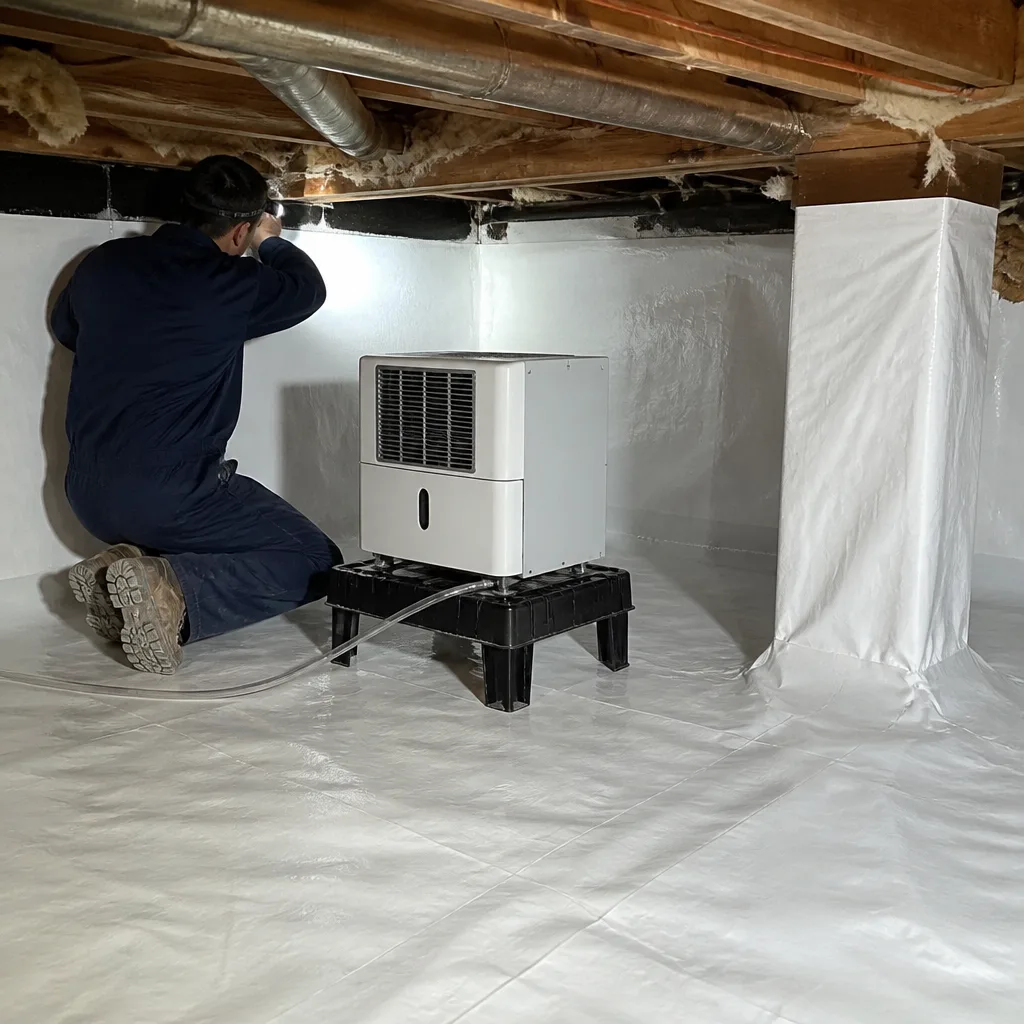
The baseline fix we recommend for most Santa Fe Springs warehouses and 1960s-era homes is a heavy reinforced vapor barrier, minimum 12-mil, often 20-mil for commercial floors. We seal it up the foundation wall and tape every seam. That’s the difference between a barrier that holds and one that lets moist air bleed through at the edges. In Santa Fe Springs, where the water table sits close to the surface in many low-lying industrial areas along the San Gabriel River corridor, a properly sealed barrier matters more than it does in dryer inland cities.
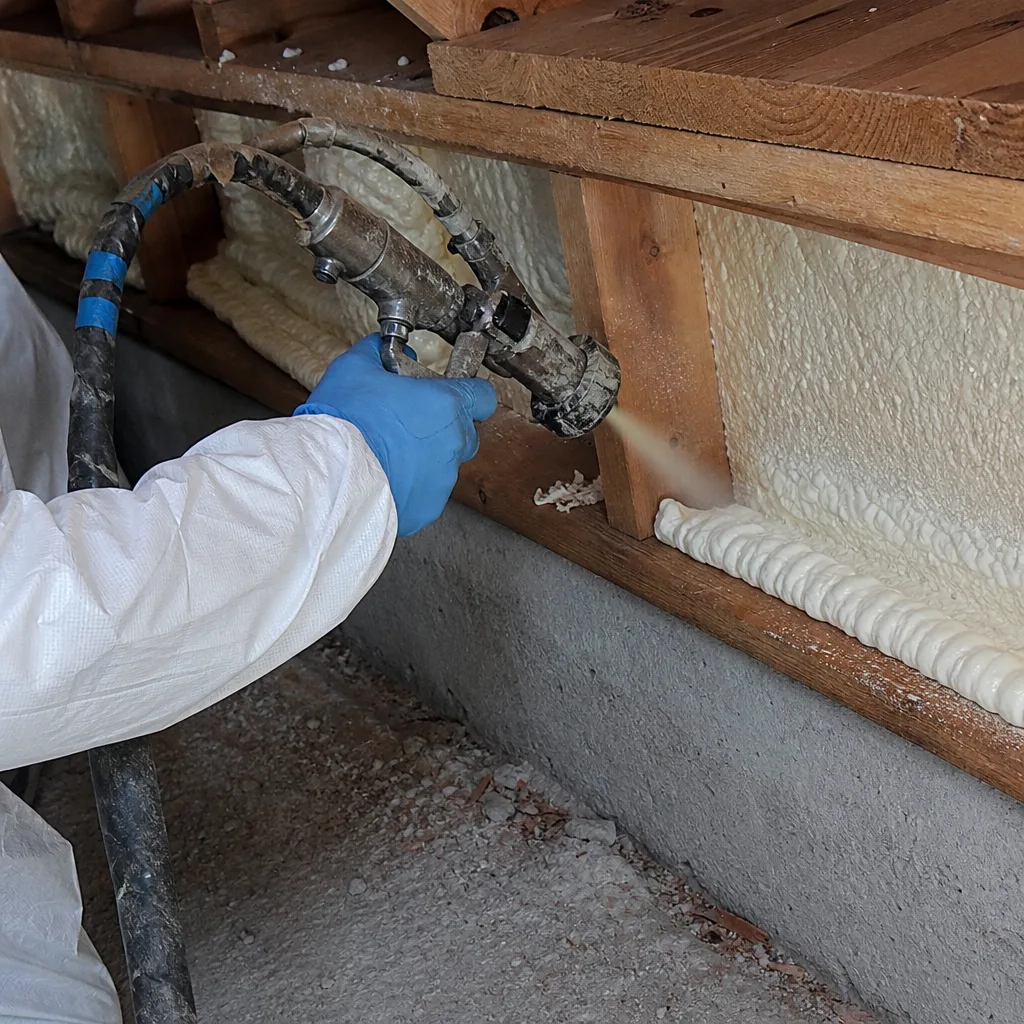
Crawl Space Encapsulation
Encapsulation goes beyond a poly sheet. It means closing the crawl space off from outside air entirely: barrier on the floor, sealed foundation walls, insulated perimeter, and conditioned air intake if needed. For a Santa Fe Springs distribution center storing paper goods or pharmaceuticals, encapsulation can push relative humidity below 60% and hold it there. For a homeowner whose 1958 tract house smells musty every August, it eliminates the damp air source under the floor joists rather than masking it.
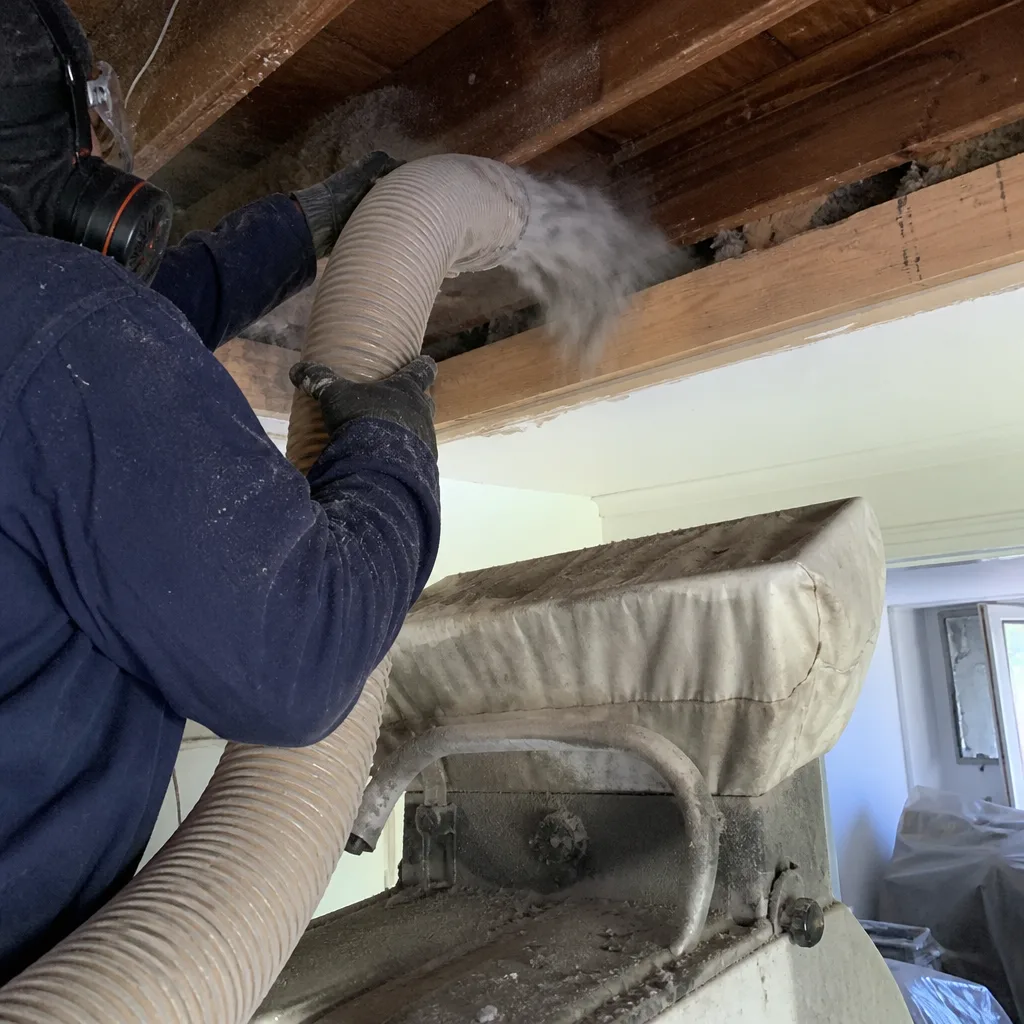
Crawl Space Insulation
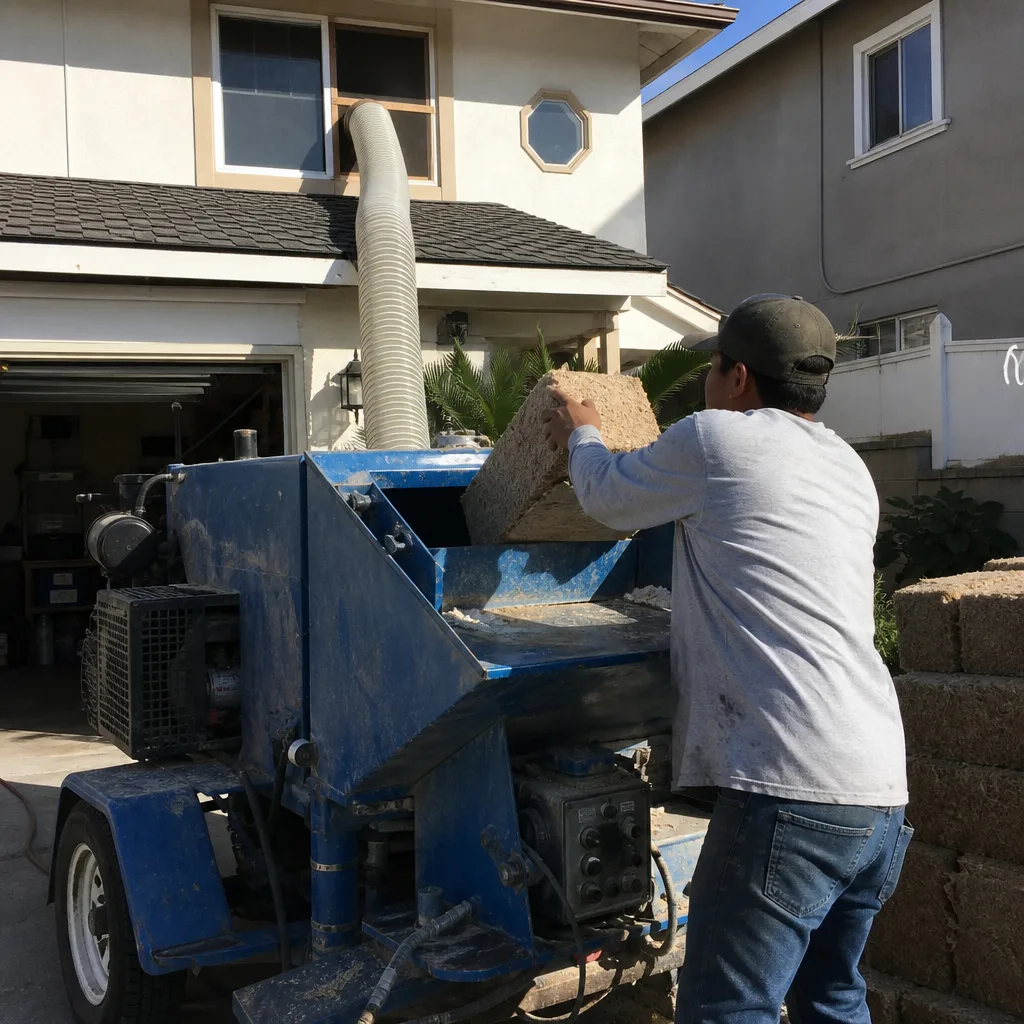
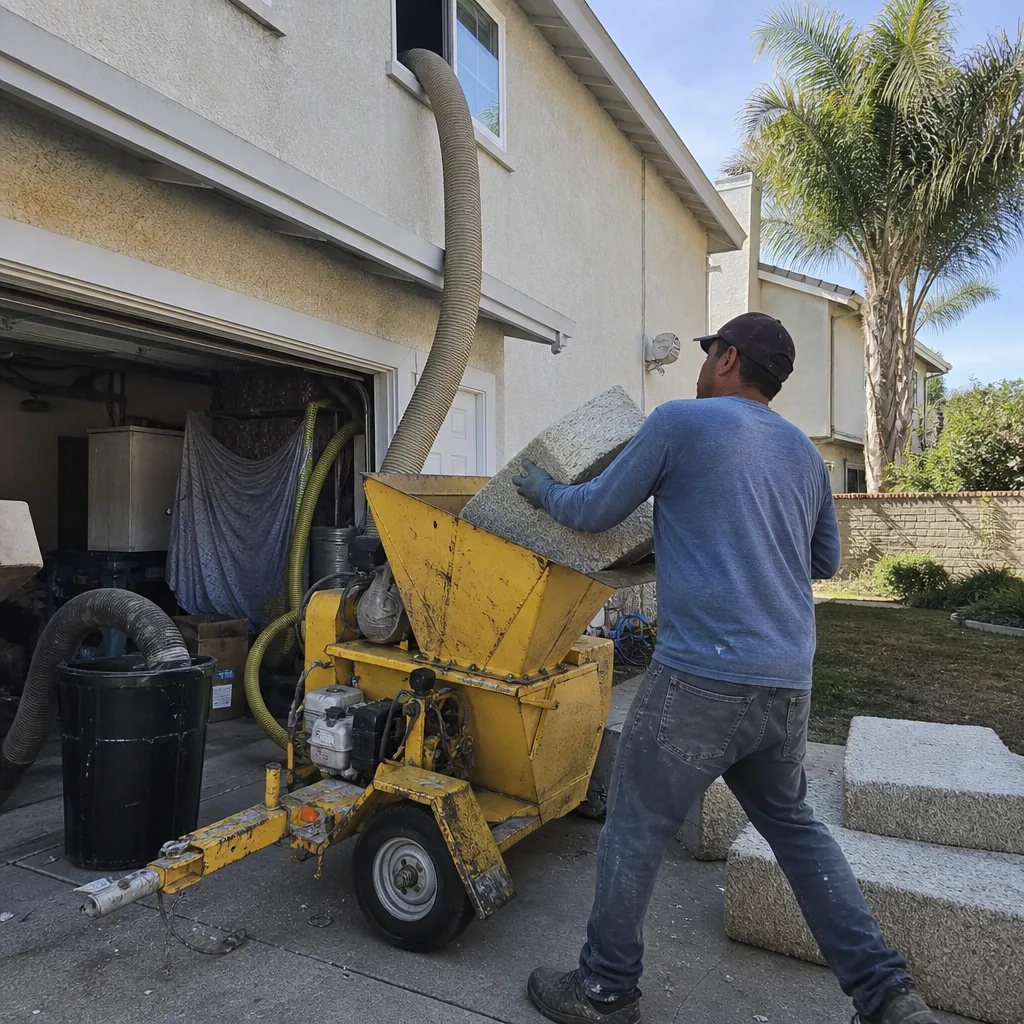
Most older Santa Fe Springs crawl spaces have fiberglass batts hanging loose, if anything. They sag, they absorb moisture, they become rodent bedding. We remove them and install what the space actually needs: closed-cell spray foam against the rim joist or Rockwool Comfortboard against foundation walls. The right material depends on whether the crawl space is vented, partially sealed, or fully encapsulated. We carry multiple product lines specifically so we don’t have to force one solution on every building.
Crawl Space Moisture Control
Moisture in a Santa Fe Springs crawl space isn’t always from groundwater. Sometimes it’s a condensate line leaking, sometimes it’s a bad grade outside directing runoff toward the foundation, sometimes it’s an abandoned sump pit that still collects water. We diagnose the source before installing anything. In one 1960s manufacturing plant off Telegraph Road, our crew found a crawl space under an office addition that was open earth with condensation dripping from galvanized ductwork. We pulled the failed 4-mil plastic, sealed the perimeter with a 20-mil reinforced barrier, taped all seams with butyl tape, and insulated the foundation walls with Rockwool Comfortboard 80. The space went from damp and musty to dry enough for paper record storage. That’s the standard we hold in Santa Fe Springs.
What happens when you call
- 1
A real person answersNo phone trees — you reach a local pro.
- 2
You get an upfront price rangeHonest numbers before anyone is dispatched.
- 3
A background-checked tech heads outLicensed & insured, dispatched right away.
- 4
You approve before work beginsNothing starts until you say go.
Trusted Brands We Service in Santa Fe Springs
We don’t default to whatever’s cheapest. We stock and install Owens Corning, Icynene, Demilec, and GreenFiber products because they actually hold up. For Santa Fe Springs’s older commercial buildings, open-cell foam from Icynene works well for irregular rim-joist cavities. For a vapor barrier that’s going to see foot traffic under a distribution center, we recommend 20-mil reinforced poly with butyl-taped seams, installed over a smoothing layer of sand where the dirt is rocky. If you need a specific product spec for a city inspector, we’ll have it on hand.
Common Crawl Space Encapsulation & Vapor Barrier Problems We See in Santa Fe Springs Homes
- Ripped or missing vapor barriers. In older Santa Fe Springs industrial buildings, original 4-mil poly from the 1950s is almost always torn. Gaps allow moist air from bare earth to flood the crawl space and condense on the underside of subfloors.
- Condensation on chilled-water pipes. Many of the older climate-controlled manufacturing spaces use chilled-water loops. In a shallow, humid crawl space, those pipes sweat constantly and soak any insulation below them. We see mold on fiberglass batts in exactly these spots.
- Hydrocarbon vapor smell. Santa Fe Springs sits on one of the richest historical oil fields in LA County. Where vapor barriers are torn or missing, volatile organic compounds from legacy petroleum residues can migrate up into building interiors. A properly sealed barrier blocks that path.
- Rodent damage. Rats and mice chew through standard poly barriers in warehouse crawl spaces. They open breaches that dump moist air onto wood furring and sill plates, accelerating rot. We address this with sealed rigid foam panels at the rim and hardware cloth at vent openings.
Pricing for Crawl Space Encapsulation & Vapor Barrier in Santa Fe Springs, CA
A residential crawl space vapor barrier in Santa Fe Springs, using 12-mil poly with sealed seams, typically runs $1.50 to $2.50 per square foot. Full encapsulation of a standard 1,200-square-foot crawl space, including foundation-wall sealing and rim-joist insulation, runs $5,000 to $9,000 depending on the condition of the existing framing and access. Commercial warehouse encapsulation often lands between $3,000 and $12,000 depending on square footage, ducting, and whether asbestos abatement must be coordinated first. If you’re seeing condensation, rodent damage, or persistent dampness, we’ll quote the exact scope. Estimates are free. Call (562) 784-9031 and we’ll walk it together.
We Also Serve Cities Near Santa Fe Springs
Summit Insulation Long Beach covers the full Santa Fe Springs area and the surrounding Southeast LA corridor. That includes Downey, Whittier, Bellflower, and Cerritos. If your building sits close to the 605 or just across the 5, we’re already working nearby and can usually schedule inspection within a day or two.
Serving Santa Fe Springs, CA — Our Local Coverage Area
We’re based in the Santa Fe Springs area and know this community well. Use the map below to see our service coverage — if you’re nearby, we can almost certainly help.
FAQs — Crawl Space Encapsulation & Vapor Barrier in Santa Fe Springs
Yes. If your building was constructed between roughly 1950 and 1980 and still has original pipe or duct insulation wrapped in a whitish, fibrous material, that likely contains asbestos. Encapsulating over it without testing violates current inspection standards and will force a re-insulation order. We don’t touch it until a certified asbestos contractor has cleared the space. The delay is short; failing to test is expensive.
Rodents are the usual culprit. Rats and mice live in and around the shallow crawl spaces under older Santa Fe Springs warehouses, and they chew through standard poly. We solve it by installing reinforced 20-mil barrier where needed and sealing the foundation perimeter with rigid foam and galvanized wire mesh at every opening. If the barrier isn’t rodent-proofed, it doesn’t matter how thick the poly is.
Yes. The floor area under a concrete tilt-up warehouse may be slab-on-grade for the main floor, but office additions and old shipping docks often have shallow dirt crawl spaces. We seal the dirt with a reinforced barrier, mechanically fasten it up the stem walls, and seal all seams. The concrete structure doesn’t change the approach. We’ve done this under tilt-up buildings from the 1960s all over Santa Fe Springs.
For any commercial crawl space that might see foot traffic or equipment storage, we recommend 20-mil reinforced poly. Thinner material punctures easily and won’t survive forklift pallets or movement of stored goods. For light residential use, 12-mil is usually sufficient. The material is secondary to the installation quality; taped seams and sealed edges matter more than thickness alone.
Look into the crawl space access. If you see bare dirt or torn plastic sheeting, that’s your answer. Many tract homes built in the 1950s and 1960s in Santa Fe Springs were built with a single layer of 4-mil poly that’s long since degraded. If you can see dirt, you have no effective vapor barrier. We’ll inspect it and tell you what’s actually needed, no upsells. Call (562) 784-9031.
Written by the team at Summit Insulation Long Beach, serving Santa Fe Springs and Southeast LA County since 2009.