
Fast, Reliable Attic Insulation Across Whittier
Attic insulation in Whittier typically costs $1,800–$4,200 for a full retrofit, with top-ups on existing insulation running $900–$1,800. Most jobs we schedule across the city are completed same-day or next-day. If your home near Uptown or up in Friendly Hills is running hot upstairs while the AC never cycles off, the attic is usually the first place we look. Call Nate at Summit Insulation Long Beach: (562) 784-9031. We work from audit to air seal to installation, and the owner is on every Whittier job personally.
We know Whittier’s housing stock the way only a crew that’s worked on Painter Avenue bungalows and Friendly Hills hillside customs can. This isn’t a generic insulation job market. The pre-war homes near Uptown, the tract houses on the eastern flatlands, and the slope-lot customs in the hills each demand a different approach to attic work. We’ve done all three, enough times to know what’s behind the walls before we open them.
Why Summit Insulation Long Beach Is Whittier’s Preferred Attic Insulation Company
Nate Calloway, our owner and lead installer, runs every attic insulation crew that rolls into Whittier. That means the guy who quotes the job is the same guy in the attic verifying baffle placement and checking for rodent damage before new material goes in. Whittier homeowners don’t get a rotating cast of subcontractors. They get one accountable source from the diagnostic through the final inspection.
We carry an eight-brand material portfolio: Owens Corning, Johns Manville, Knauf, Rockwool, CertainTeed, Icynene, Demilec, and GreenFiber. That range exists for one reason: precision. A 1929 Spanish Colonial Revival on Painter Avenue has different attic needs than a 1978 custom in Friendly Hills. We match the material to the house, not the other way around.
Response time to Whittier from our Long Beach base runs about 45–60 minutes for scheduled service, and we batch Whittier calls to keep drive time from inflating your estimate. That means we can often be in your attic the same week you call. Emergency calls for failed top-ups or rodent-compromised insulation typically get next-day attention, depending on the day.
We’ve been through enough Whittier attics to know which neighborhoods hide vermiculite, which tract-home bands have settled fiberglass slumping below R-19, and which hillside customs need subfloor work before attic work makes sense. That local depth only comes from repeated service in one city’s specific housing stock.
Our Attic Insulation Services in Whittier
Blown-In Attic Insulation
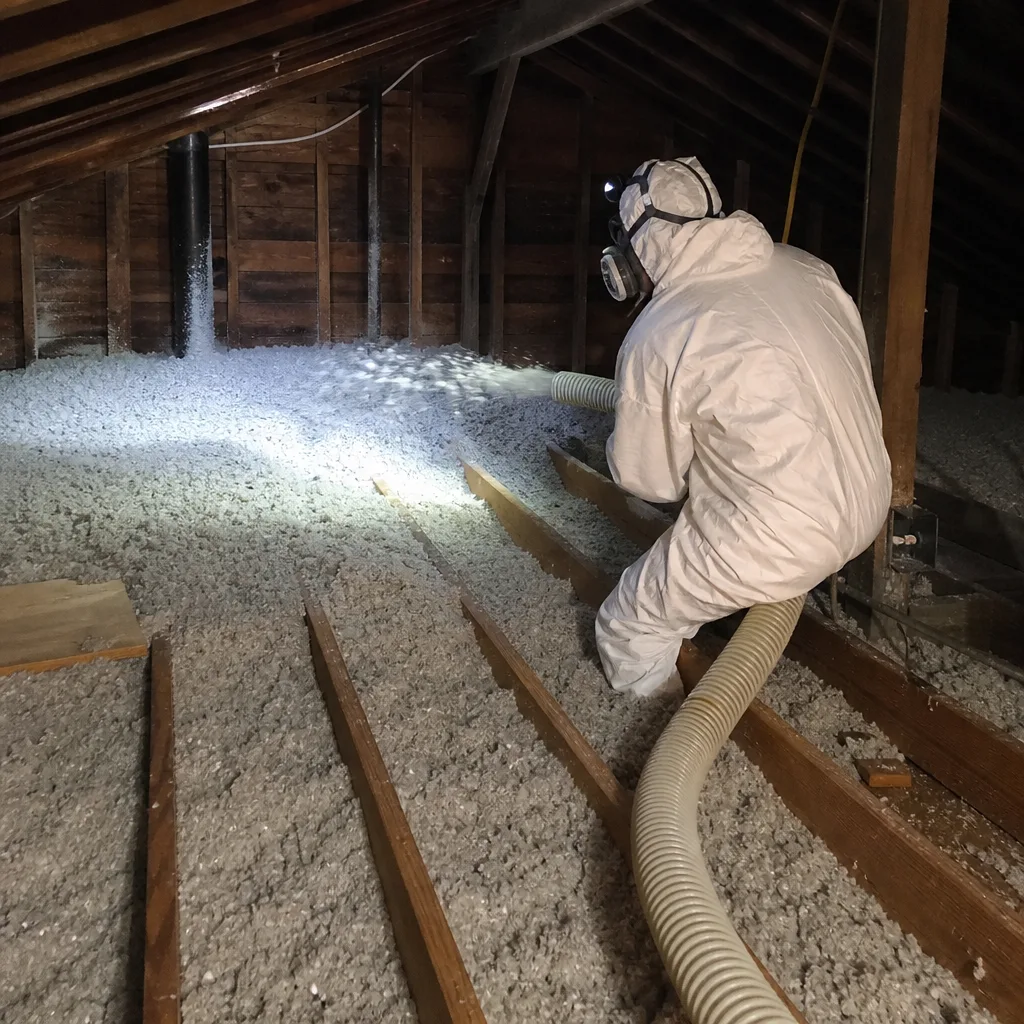
Blown-in attic insulation in Whittier runs $1.50–$2.80 per square foot for most homes, depending on depth and whether we’re working over an existing layer or starting clean. For pre-war lath-and-plaster attics near Uptown, we typically blow Owens Corning AttiCat fiberglass to R-38 or R-49 after confirming baffles are in place. On slope-lot homes in Friendly Hills where floor-level heat rises into the attic, we sometimes pair blown-in material with subfloor insulation to break the thermal loop.
This is the fastest way to bring a Whittier attic up to code. The material settles into odd cavities behind knee walls and around old framing in ways batt insulation can’t match. In the eastern flatland tract homes from the 1950s and 1960s, blown-in work often begins with removing slumping old fiberglass that’s doing almost nothing.
Attic Batt Insulation
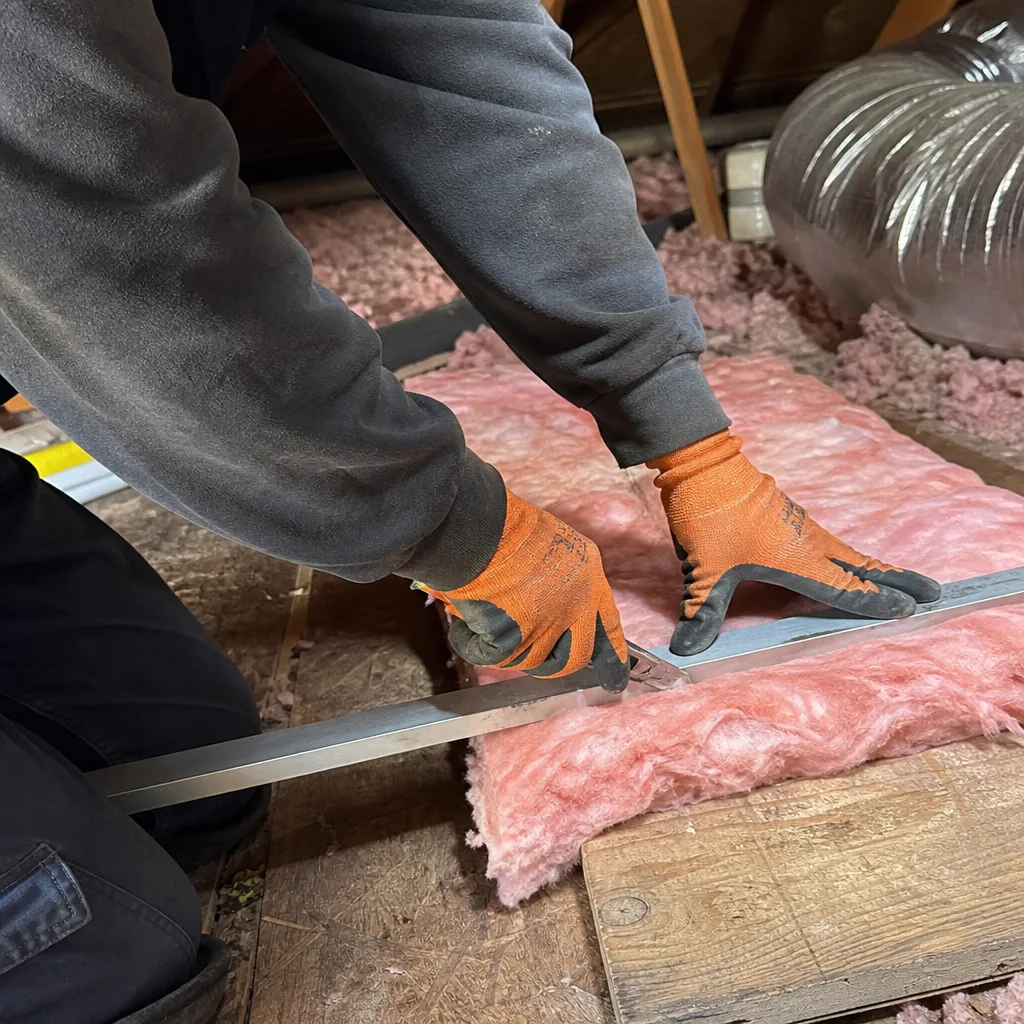
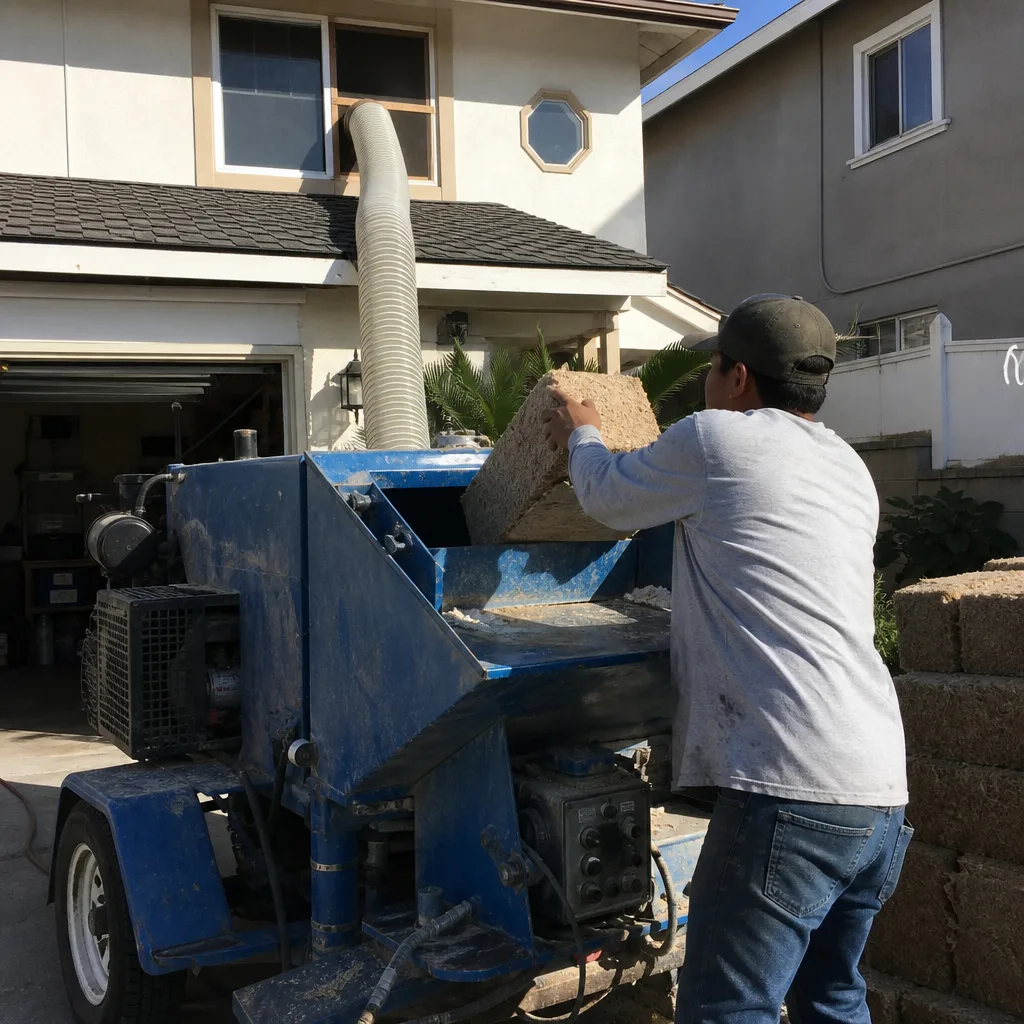
Batt insulation remains the right call for certain Whittier attics: open, unobstructed joist bays where a clean install beats loose-fill for future access. We install Johns Manville and Owens Corning batts in R-30 to R-38 thicknesses. For homes with storage decking planned or existing, batts hold their shape better and make future maintenance cleaner.
Cost for batt attic insulation in Whittier generally lands between $1.30 and $2.50 per square foot installed. Pre-war homes with irregular joist spacing sometimes need custom cuts; tract homes from the 1950s usually accept standard 15- and 23-inch widths without issue.
Attic Insulation Top-Up
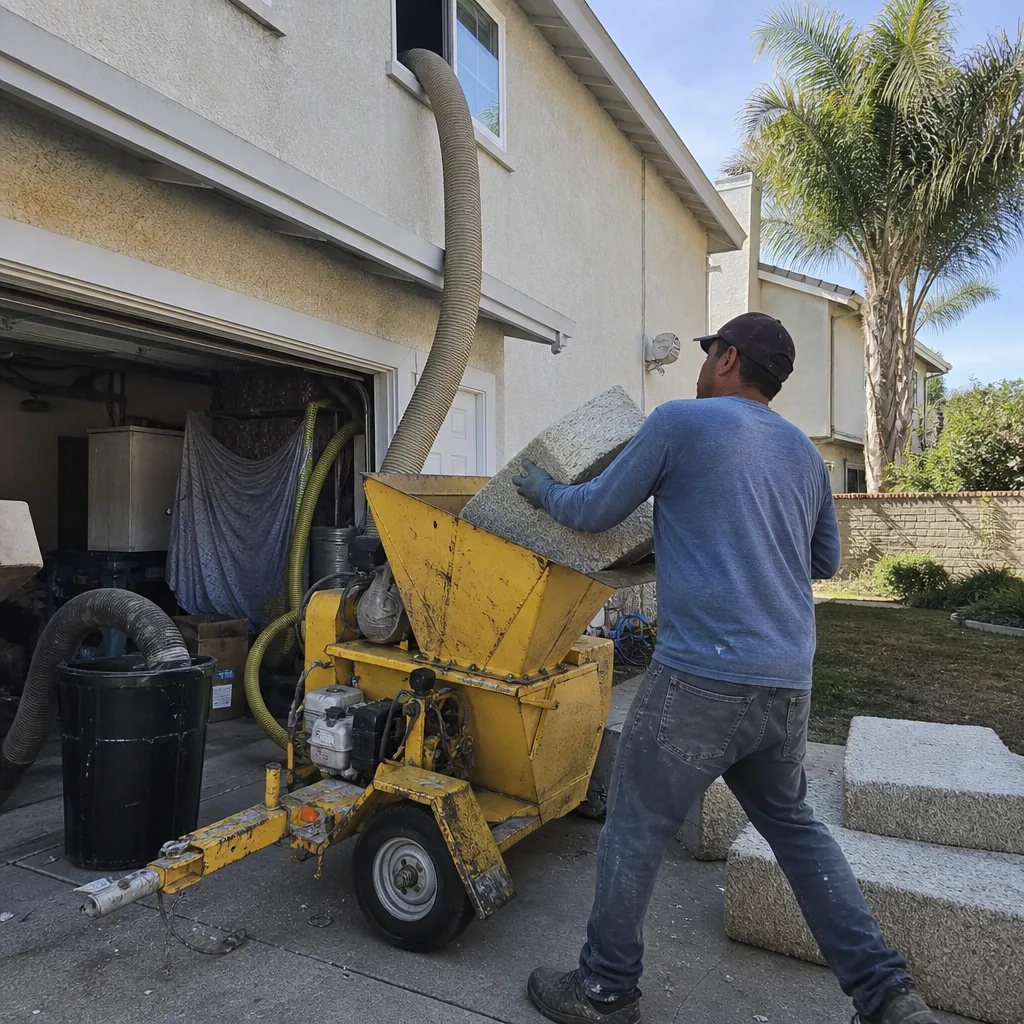
Top-ups are the highest-ROI attic job we do in Whittier’s older housing stock. If your home has fiberglass from the 1970s or earlier, it’s likely settled to less than half its original R-value. A top-up over existing material runs $900–$1,800 in most Whittier homes and can cut attic heat transfer by a third in one afternoon.
We check for rodent contamination before topping up. Blowing new material over old, compromised insulation seals the problem in, not out. That’s why cleaning and rodent proofing happen before new material goes in on our jobs. This sequencing matters doubly in Whittier, where pre-war attics with original framing attract squirrels and roof rats through gaps that have been open for ninety years.
Attic Insulation Replacement
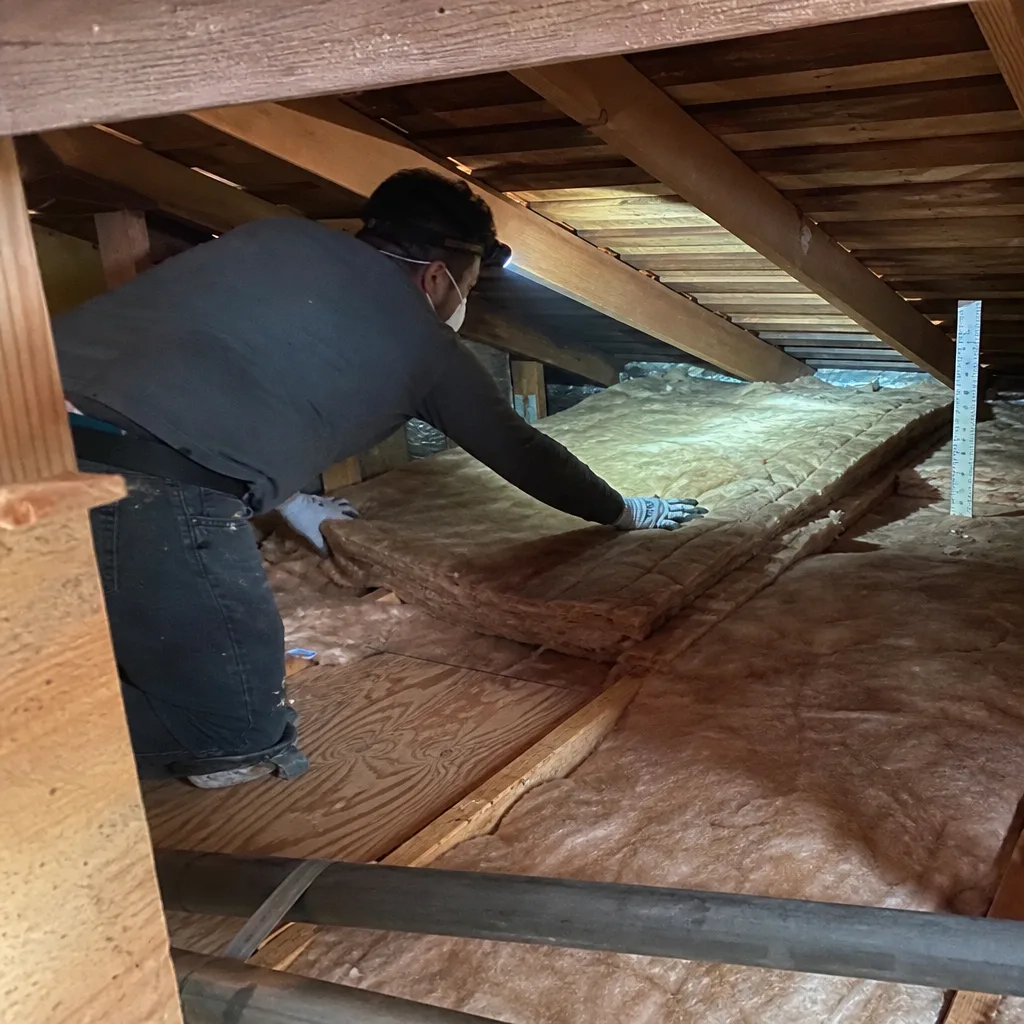
Full removal and replacement in Whittier runs $2,000–$4,500 for most homes, with larger or severely contaminated attics pushing higher. We remove old material by hand, inspect the decking and framing, treat for pests if needed, air-seal the attic floor, and then install fresh insulation to current code levels.
The replacement route makes sense when your existing material is water-damaged, rodent-saturated, or so old it’s no longer doing structural work. Whittier homes built before 1940 often have attics that have never been cleaned in their entire life. We see it on Painter Avenue, on Philadelphia Street, on the streets around Whittier College. Old dust, old wiring, old nests. Starting clean changes the performance of everything we install after.
What happens when you call
- 1
A real person answersNo phone trees — you reach a local pro.
- 2
You get an upfront price rangeHonest numbers before anyone is dispatched.
- 3
A background-checked tech heads outLicensed & insured, dispatched right away.
- 4
You approve before work beginsNothing starts until you say go.
Trusted Brands We Service in Whittier
We install Owens Corning and Johns Manville fiberglass systems across Whittier’s tract homes, and we spec Demilec spray foam and GreenFiber cellulose for the tighter, harder-to-reach attics common in the pre-war band around Uptown. If you already have a specific brand in your attic, we can match it for a top-up rather than forcing a full replacement. If you don’t have a preference, we’ll tell you what we’d install in our own house on your street.
Common Attic Insulation Problems We See in Whittier Homes
- Pre-war lath-and-plaster attics with no baffles. Homes from the 1920s and 1930s near Uptown were built before continuous ridge and soffit ventilation was standard. Blown-in insulation installed without baffles blocks the few soffit vents these attics have, which traps heat and humidity, leading to plaster cracking in ceiling corners. We correct this with baffle installation before insulation goes in.
- Santa Ana-dried fiberglass in post-war tract homes. Santa Ana wind events strip moisture and dry out old fiberglass batts in the 1950s and 1960s homes on the eastern flatlands. Once dried and settled below R-19, the insulation stops doing its job. Ridge vents stop working properly because there’s no thermal drive left in the attic cavity. Top-ups fix this, but only if the old material is stable enough to build on.
- Friendly Hills hillside homes with uninsulated crawl spaces. Custom homes built on slope lots in the 1960s and 1970s often have partial crawl spaces under the living floor. Heat rises from the crawl space into the attic cavity, meaning attic-only insulation doesn’t solve the comfort problem. We flag this on every Friendly Hills estimate and often recommend crawl space encapsulation or subfloor insulation alongside attic work.
- Rodent-compromised insulation in older Whittier attics. Decades-old attics with original framing, especially in the Craftsman band near Uptown and along the Greenway, are squirrel and roof rat magnets. Contaminated insulation has to come out before new material goes in. We bundle attic cleaning and rodent proofing as a core part of our replacement service in Whittier.
Pricing for Attic Insulation in Whittier, CA
A full attic insulation replacement in Whittier typically runs $2,000–$4,500 depending on square footage, access difficulty, and whether remediation work is needed first. Blown-in top-ups over existing material range from $900–$1,800. Batt insulation installs land between $1.30 and $2.50 per square foot. Radiant barrier, often requested by Friendly Hills homeowners dealing with direct afternoon sun on southwest-facing roof planes, adds $1.50–$2.50 per square foot to attic work.
The biggest variables in Whittier are attic access and existing conditions. A 1930s bungalow with a pull-down ladder and clean decking costs less to retrofit than a 1960s split-level with a scuttle hole and rodent damage. We assess before we quote, and estimates are free. Call Nate at (562) 784-9031 for a specific number for your attic.
We Also Serve Cities Near Whittier
Our service territory covers Whittier and the surrounding communities of Whittier plus Santa Fe Springs, Downey, Bellflower, and Cerritos. Many of our crews live and work across this corridor, so we’re never far when a top-up, replacement, or emergency insulation call comes in. If you’re just outside city limits, call and ask. We’ll tell you straight if we can get to you.
Serving Whittier, CA — Our Local Coverage Area
We’re based in the Whittier area and know this community well. Use the map below to see our service coverage — if you’re nearby, we can almost certainly help.
FAQs — Attic Insulation in Whittier
Whittier sits 15 to 20 miles inland from the Pacific, which means the marine layer that keeps coastal Long Beach attics cooler arrives late or not at all. Summer highs in Whittier run 5 to 10 degrees hotter, and Santa Ana winds strip residual moisture that would otherwise buffer attic heat. That’s an extra 15 to 20 degrees of attic temperature on the hottest afternoons, and under-insulated attics in Whittier transmit more of that heat into the living space. Call (562) 784-9031 and we’ll measure what your attic is holding.
Yes. The Spanish Colonial Revival homes near Uptown were built with lath-and-plaster walls and original roof framing that’s often irregular and never designed for insulation. We typically need custom baffle work for these homes to keep blown-in material from blocking the few vents they do have. We also use blown-in fiberglass or cellulose rather than batts because it fills the odd cavities behind curved eaves and knee walls. Our team has done this work throughout the historic district, so the learning curve is already behind us.
Often not. Friendly Hills customs from the 1960s and 1970s sit on slope lots with crawl spaces under part or all of the living floor. Heat from the crawl space rises into the attic cavity, so attic-only insulation leaves a comfort gap. We recommend assessing the crawl space as part of any Friendly Hills attic estimate. Sometimes floor or subfloor insulation matters more than another attic layer.
The original fiberglass batts installed in Whittier’s post-war tract homes were typically R-11 or R-19 at best, and Santa Ana wind events dry them out over time. Once those batts lose their loft and settle, they slump below R-19 and stop trapping air. Ridge vents lose effectiveness because there’s no warm air drive left in the attic. A top-up with blown-in fiberglass or cellulose usually restores performance without a full removal.
Usually yes, if the existing material is dry, structurally intact, and free of rodent contamination. We inspect first. If the old insulation has been water-damaged or pest-soiled, topping up traps the problem under new material. In clean Whittier attics, we blow additional material to reach R-49 and call it done. The inspection costs you nothing. Call (562) 784-9031 and we’ll tell you what your attic qualifies for.
Written by Nate Calloway, Owner and Lead Installer at Summit Insulation Long Beach, serving Whittier since day one.