
Spray Foam Insulation in Signal Hill, CA
Spray foam insulation in Signal Hill solves a problem that batt insulation simply cannot address: the relentless southwest winds that push unconditioned air through wall cavities and rim joists on this 365-foot hilltop. Homes here leak air in ways the surrounding Long Beach basin never sees, which is why we recommend spray foam for many Signal Hill properties, particularly 1980s and 1990s condominiums and townhomes with minimal original wall insulation. Call Summit Insulation Long Beach at (562) 784-9031 for a free estimate, and we’ll assess whether Spray Foam Insulation is the right application for your Signal Hill home.
Why Signal Hill Homes Are Different
Signal Hill sits squarely atop the historic Signal Hill Oil Field, and that changes insulation work in ways most homeowners never consider. Large portions of the city fall within designated methane gas intrusion zones. Any work we do near crawl spaces, slab edges, rim joists, or wall penetrations must account for existing methane barrier systems without compromising them. Disturbing a vapor barrier or drilling new penetrations on a methane-designated parcel can trigger building department review before an insulation permit closes. That’s a step out-of-town crews routinely miss, and it’s one reason we pull methane zone maps before quoting any Signal Hill job that touches sub-slab access.
The housing stock adds another layer. After oil production wound down, Signal Hill was aggressively redeveloped from the late 1970s through the 1990s. The result is a city dominated by condominiums and townhomes from that era, many built with wall insulation that has since compressed or moisture-degraded. A secondary layer of mid-century single-family homes from the 1940s through 1960s remains on the hill’s residential streets, typically with original fiberglass batts that have settled far below current California Title 24 requirements. And because the hilltop elevation regularly places Signal Hill above or at the edge of the coastal marine layer, infiltration, not raw R-value, is usually the dominant energy-loss driver. Air sealing and dense insulation applications outperform simple batt replacements here.
Our Main Signal Hill Services
Two services account for most of the calls we field from Signal Hill homeowners: attic insulation upgrades in aging mid-century houses, and crawl space work in methane-zone parcels where vapor barrier integrity is non-negotiable.
Attic Insulation in Signal Hill
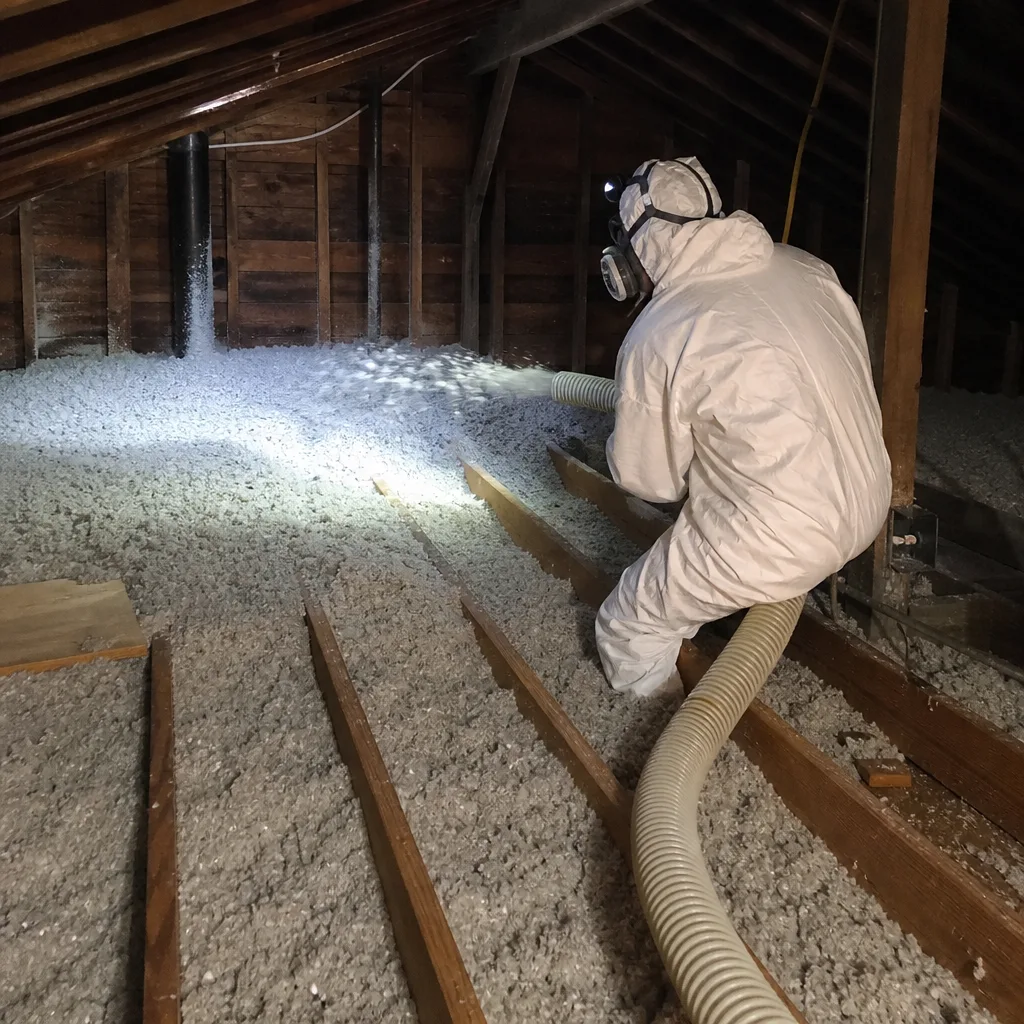
Signal Hill’s 1940s through 1960s single-family homes almost always need attic insulation attention. Original fiberglass batts in these houses have settled, compressed, and lost R-value over decades, leaving ceilings that radiate heat in summer and leak it in winter. We remove degraded material, air seal the attic floor, and install fresh blown-in insulation to current Title 24 levels. The goal is a continuous thermal boundary that cuts the stack effect, which is pronounced on a windswept hilltop. Attic Insulation in Signal Hill covers the full scope of that work.
Crawl Space Encapsulation & Vapor Barrier in Signal Hill
In a city where methane gas intrusion zones overlap residential neighborhoods, a compromised crawl space vapor barrier is never just a moisture problem. We inspect the existing methane barrier first, then install or repair encapsulation so that moisture, soil gases, and air infiltration are all addressed in one pass. Condominiums and townhomes with shared crawl spaces need this coordination more than most, because a breach in one unit’s barrier affects the entire building envelope. Crawl Space Encapsulation & Vapor Barrier in Signal Hill details that process.
What happens when you call
- 1
A real person answersNo phone trees — you reach a local pro.
- 2
You get an upfront price rangeHonest numbers before anyone is dispatched.
- 3
A background-checked tech heads outLicensed & insured, dispatched right away.
- 4
You approve before work beginsNothing starts until you say go.
Spray Foam Insulation in Signal Hill
Spray foam insulation in Signal Hill addresses the specific failure mode of this hilltop city: wind-driven air infiltration. The sustained southwest onshore winds that hit Signal Hill’s windward wall assemblies force unconditioned air through every gap, crack, and penetration in a home’s envelope. Fiberglass batts filter air; they do not stop it. Spray foam does both, creating an air seal and an insulation layer in one application. For 1980s and 1990s condominiums with compressed wall insulation, or for mid-century houses where rim joists never got any treatment at all, spray foam is frequently the difference between a home that holds temperature and one that cannot. We install open-cell and closed-cell systems from Demilec and Icynene, selected based on the specific application and the moisture profile of the space.
Open-Cell Spray Foam
Signs you need it
You hear wind noise in upstairs rooms even with windows closed. Interior walls feel cold to the touch on winter mornings. You have a vented attic that needs both air sealing and insulation without adding vapor impermeability. These are the conditions where open-cell foam in Signal Hill does its best work.
What it costs in Signal Hill
Open-cell spray foam in Signal Hill typically runs $1.10 to $1.80 per board foot installed.
How we do it
We air seal all penetrations first, then apply open-cell foam to the target assemblies. Because open-cell is vapor permeable, it works well in vented attics and above-grade walls where drying potential matters. We trim and inspect every pass before covering.
Closed-Cell Spray Foam
Signs you need it
You have a crawl space or rim joist area that stays damp. You need insulation in a methane-zone area where the foam must act as part of the gas barrier strategy. You want maximum R-value per inch in a shallow cavity. Closed-cell foam fits all three Signal Hill scenarios.
What it costs in Signal Hill
Closed-cell spray foam in Signal Hill typically runs $2.10 to $3.20 per board foot installed.
How we do it
We confirm the site is dry enough for closed-cell application, then spray to the specified depth. Closed-cell foam adds structural rigidity and acts as a vapor retarder, which is why we use it in crawl spaces and rim joists across Signal Hill. Every lift is checked for density and coverage.
Rim Joist Spray Foam
Signs you need it
Your floor is cold near exterior walls in winter. You smell musty air rising from the crawl space. Your home is a 1940s to 1960s Signal Hill single-family with an uninsulated rim joist band. These are classic rim joist leakage indicators.
What it costs in Signal Hill
Rim joist spray foam in Signal Hill typically runs $850 to $1,900 for a standard home perimeter.
How we do it
We clear the rim joist area of debris and old insulation, then apply closed-cell foam to the band joist and sill plate. This seals the largest single air leak in most crawl space homes and adds insulation where none existed. It also supports the methane barrier system by sealing the transition gap.
Spray Foam Roof Deck
Signs you need it
Your attic is unvented and you want to move the thermal boundary to the roof line. You have HVAC equipment or ductwork in the attic and need to bring it inside the conditioned envelope. These are situations where roof deck foam is the right call.
What it costs in Signal Hill
Spray foam roof deck application in Signal Hill typically runs $3,100 to $5,800 for a standard ranch or townhome roof.
How we do it
We seal the attic’s existing vents, then spray foam directly to the underside of the roof deck from eave to ridge. This creates a conditioned attic that stops heat gain before it enters the living space. It also protects ductwork from the extreme temperature swings Signal Hill attics see in summer.
What Spray Foam Insulation Costs in Signal Hill
| Item | Typical range in Signal Hill |
|---|---|
| Open-cell spray foam (per board foot) | $1.10 – $1.80 |
| Closed-cell spray foam (per board foot) | $2.10 – $3.20 |
| Rim joist spray foam (standard perimeter) | $850 – $1,900 |
| Garage ceiling spray foam | $1,400 – $2,900 |
| Spray foam roof deck | $3,100 – $5,800 |
Does spray foam stop the wind noise in Signal Hill homes?
Yes, and that is exactly why it works so well on this hilltop. Spray foam fills the gaps that wind exploits, particularly in rim joists and wall top plates. Once the air leaks are sealed, the whistling and pressure changes stop. Call (562) 784-9031 to schedule a blower door test and confirm where your air leaks are.
Is spray foam safe for homes in Signal Hill’s methane zones?
Closed-cell spray foam can serve as a component of a methane mitigation system when installed to the correct specifications. We coordinate with the building department on any parcel flagged for methane intrusion before we spray. Never cut into an existing barrier without knowing your zone status. Call us for a site review.
Blown-In Insulation in Signal Hill
Blown-in insulation is the most common upgrade we perform in Signal Hill mid-century homes, because it solves the dominant problem: settled, compressed fiberglass batts that have lost most of their R-value. Loose-fill cellulose from GreenFiber or blown fiberglass from Owens Corning fills every corner, odd cavity, and irregular joist bay far more completely than batts ever could. In Signal Hill’s condominium-dominated housing stock, blown-in material also lets us work through small access points without tearing out walls or ceilings. We typically pair blown-in work with attic air sealing, because on this wind-exposed hilltop, insulation without air sealing is half a job. Blown-In Insulation is our most requested retrofit for older Signal Hill attics.
Blown-In Cellulose
Signs you need it
Your attic insulation looks thin, settled, or uneven. You feel temperature swings between rooms. Your home was built before 1990 and the attic has never been topped up. GreenFiber cellulose is ideal for these Signal Hill retrofits.
What it costs in Signal Hill
Blown-in cellulose in Signal Hill typically runs $1.55 to $2.30 per square foot installed to code depth.
How we do it
We air seal the attic floor, mark depth indicators, and blow cellulose to the specified R-value. Cellulose settles less than fiberglass and resists airflow through the material itself, which matters on a windy hilltop. We check density and depth in at least a dozen locations across the attic.
Blown-In Fiberglass
Signs you need it
You want a material that will not retain moisture. Your attic has adequate ventilation. You prefer a lighter-weight insulation option. Owens Corning blown fiberglass fits this profile well.
What it costs in Signal Hill
Blown-in fiberglass in Signal Hill typically runs $1.15 to $1.85 per square foot installed to code depth.
How we do it
We blow loose-fill fiberglass to the depth required for current Title 24 compliance, typically R-38 to R-49 for attic floors in this climate zone. Fiberglass does not settle as much as some contractors claim when installed to the correct coverage weight. We verify final depth with a depth gauge, not a guess.
Dense-Pack Wall Insulation
Signs you need it
Your exterior walls are hollow or barely insulated. Your home dates from the 1980s or 1990s condominium boom and you feel air movement through outlets and switches. Dense-pack cellulose or fiberglass fills these cavities without opening the walls.
What it costs in Signal Hill
Dense-pack wall insulation in Signal Hill typically runs $2.10 to $3.40 per square foot of wall area.
How we do it
We drill small access holes at each stud bay, then blow insulation under pressure until the cavity is fully packed. The material stops air movement through the wall, which is the primary comfort issue in Signal Hill’s wind-exposed buildings. We patch every hole and repaint to match where needed.
Blown-In Top-Up
Signs you need it
Your attic has insulation but it sits below the top of the joists. Your energy bills have crept up year over year. You do not need full removal, just additional depth. A top-up is the most cost-effective first step for many Signal Hill homes.
What it costs in Signal Hill
A blown-in top-up in Signal Hill typically runs $0.85 to $1.30 per square foot.
How we do it
We inspect the existing material for contamination or moisture. If it is sound, we air seal the attic floor first, then blow additional insulation directly over the existing layer. The air sealing is what most top-up bids miss, and on Signal Hill’s windy hilltop it is the step that actually cuts your bills.
What Blown-In Insulation Costs in Signal Hill
| Item | Typical range in Signal Hill |
|---|---|
| Blown-in cellulose (per sq ft) | $1.55 – $2.30 |
| Blown-in fiberglass (per sq ft) | $1.15 – $1.85 |
| Dense-pack wall insulation (per sq ft of wall) | $2.10 – $3.40 |
| Blown-in top-up (per sq ft) | $0.85 – $1.30 |
How much blown-in insulation does a Signal Hill attic need?
Current Title 24 requires R-38 to R-49 in attic floors for this climate zone, which translates to roughly 12 to 16 inches of blown fiberglass or 10 to 14 inches of cellulose. Most 1940s to 1960s Signal Hill homes we inspect have R-11 to R-19 at best. Call (562) 784-9031 and we’ll measure what you have.
Can you blow insulation into walls without removing drywall?
Yes. Dense-pack installation goes through small access holes drilled in each stud bay, either from the interior or exterior. We patch and repaint the holes when we’re done. It is the least invasive way to add wall insulation to Signal Hill’s older condominium and townhome stock. Call us for a wall assessment.
Radiant Barrier Installation in Signal Hill
Radiant barrier installation in Signal Hill attacks a heat gain problem that batts and blown material cannot solve. On a hilltop that sits above the marine layer more often than the surrounding basin, summer sun beats directly onto roofs, and that heat radiates down through attic insulation into living spaces. A radiant barrier reflects that heat before it reaches the insulation, dropping attic temperatures by a measurable margin. We install foil radiant barrier as a standalone service or alongside any attic insulation job, because it addresses the radiative load that Radiant Barrier Installation is specifically designed to cut. Most general insulation contractors in this area do not offer it at all.
Attic Radiant Barrier
Signs you need it
Your upstairs rooms run noticeably hotter than downstairs in summer. Your attic feels like an oven when you open the hatch. You already have insulation but your air conditioner still cannot keep up on hot afternoons. These are direct signs of radiant heat gain.
What it costs in Signal Hill
An attic radiant barrier in Signal Hill typically runs $0.90 to $1.60 per square foot of attic floor area.
How we do it
We staple foil radiant barrier to the underside of the roof rafters, leaving an air gap that is essential for the reflective surface to work. This keeps heat from ever reaching the attic floor insulation below. Ventilation remains intact, which matters for Signal Hill’s wind-exposed roof lines.
Radiant Barrier Foil
Signs you need it
You want the lowest-cost radiant heat reduction available. Your roof has standard rafter framing. You plan to replace attic insulation in the next few years and want the radiant layer in place first. Foil barrier is the right starting point.
What it costs in Signal Hill
Radiant barrier foil in Signal Hill typically runs $0.55 to $0.95 per square foot for material and installation.
How we do it
We install perforated or solid foil, depending on your attic’s moisture profile, directly under the roof deck. Perforated foil allows some vapor transfer, which matters in Signal Hill homes where attic ventilation is already marginal. We lap every seam and leave the required air gap.
Radiant Barrier Roof Deck
Signs you need it
You are replacing your roof and want to install the radiant layer before new decking goes down. You want the barrier applied at the sheet level where it works best. This is the most durable radiant barrier application available.
What it costs in Signal Hill
Radiant barrier roof deck application in Signal Hill typically runs $0.75 to $1.30 per square foot, often coordinated with roof replacement.
How we do it
We apply foil-faced decking or foil directly to the roof sheathing before shingles or tile go on. This puts the reflective surface exactly where solar radiation first hits the structure. It is the most effective placement for a radiant barrier, because the reflection happens before heat conducts through the deck.
Radiant Barrier & Ventilation
Signs you need it
Your attic has soffit and ridge vents but heat still builds to extreme levels in summer. You want to combine a radiant barrier with a ventilation review. Signal Hill’s wind side can over-ventilate one side of an attic while under-ventilating the other, and this service addresses both.
What it costs in Signal Hill
Radiant barrier with a ventilation review in Signal Hill typically runs $1,300 to $2,800 for a standard attic.
How we do it
We map your attic’s existing airflow pattern, note any blocked soffit vents or undersized ridge vents, install the radiant barrier, and adjust ventilation where needed. On Signal Hill’s wind-facing slopes, balanced ventilation is the difference between a barrier that works and one that just sits there. Every job ends with a thermal check.
What Radiant Barrier Installation Costs in Signal Hill
| Item | Typical range in Signal Hill |
|---|---|
| Attic radiant barrier (per sq ft of attic floor) | $0.90 – $1.60 |
| Radiant barrier foil (per sq ft) | $0.55 – $0.95 |
| Radiant barrier roof deck (per sq ft) | $0.75 – $1.30 |
| Radiant barrier & ventilation review | $1,300 – $2,800 |
Does a radiant barrier help if my attic already has good insulation?
Yes, and this is the part most people miss. Insulation slows conductive heat; a radiant barrier stops radiative heat before it even reaches the insulation. In a Signal Hill summer, the roof deck can hit 140 degrees or higher. Reflecting that heat away reduces the load your insulation has to fight. Call (562) 784-9031 to see if your attic is a candidate.
How much cooler will my Signal Hill attic get with a radiant barrier?
Attic temperature drops of 20 to 30 degrees on peak summer afternoons are common when a radiant barrier is installed correctly with proper ventilation. The exact drop depends on roof orientation, shading, and existing ventilation. Wind-exposed Signal Hill attics often see bigger improvements because airflow is not the limiting factor. Call us for an attic assessment.
Insulation Removal & Replacement in Signal Hill
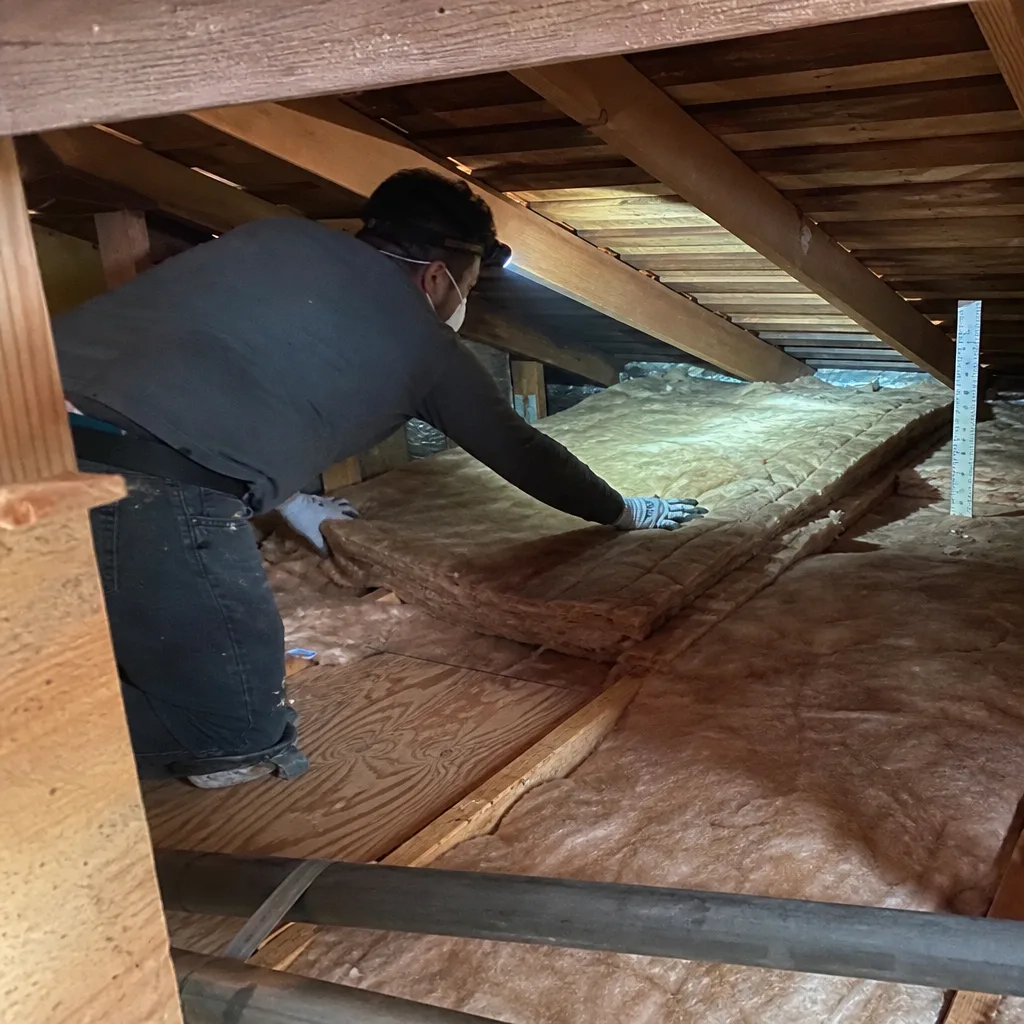
Insulation removal and replacement in Signal Hill usually starts with one of three discoveries: rodent contamination, moisture damage from a roof or plumbing leak, or simply material that has compacted into near-uselessness after four or five decades. In the 1940s through 1960s houses on the hill, original fiberglass batts are frequently matted, dust-laden, and doing little more than occupying space. In 1980s and 1990s condominiums, we regularly find moisture-degraded wall insulation that cannot be restored. Before any new insulation goes in, the old material and whatever contaminated it has to come out. Insulation Removal & Replacement is the remediation step most retrofit bids skip, and it is the step that determines whether your new insulation actually performs.
Attic Insulation Removal
Signs you need it
Your attic insulation is compressed, dust-caked, or discolored. You can see rodent droppings or nesting material mixed into the batts. You want a clean substrate before air sealing and new insulation go in. These are all removal triggers.
What it costs in Signal Hill
Attic insulation removal in Signal Hill typically runs $1.20 to $2.10 per square foot.
How we do it
We set up containment to keep dust out of your living space, vacuum the old insulation out through a commercial-grade system, and bag everything for disposal. The goal is a bare attic floor so we can air seal every penetration properly. Skipping this step on a contaminated attic means sealing dirt and droppings permanently into your home.
Contaminated Insulation Removal
Signs you need it
You smell a persistent musty or ammonia-like odor from the attic. You have had rodents in the attic at any point. You see staining on the insulation from moisture or urine. Contaminated material is removed the same way, but with stricter containment and sanitation.
What it costs in Signal Hill
Contaminated insulation removal in Signal Hill typically runs $1.70 to $2.80 per square foot.
How we do it
We run full containment with negative air pressure, remove all contaminated material, and sanitize the affected surfaces before any new insulation is considered. In Signal Hill’s condominium buildings, we coordinate containment so no dust migrates to neighboring units. The sanitation step is not optional when vermin have been present.
Vermiculite & Old Insulation Removal
Signs you need it
Your attic contains vermiculite, which may contain asbestos. You have old cellulose that has compacted into a dense mat. You have multiple layers of different materials from decades of partial top-ups. These situations call for careful removal.
What it costs in Signal Hill
Vermiculite and old insulation removal in Signal Hill typically runs $2.30 to $4.10 per square foot.
How we do it
We never disturb vermiculite without first testing it. If testing indicates asbestos, we bring in the correct remediation protocol before any vacuuming begins. For non-asbestos old material, we remove everything down to the attic floor, then inspect the deck for damage or mold. This is slow, careful work, and we quote it accurately the first time.
Insulation Replacement
Signs you need it
You have already removed old or contaminated insulation and need new material installed. You want to upgrade from batts to blown-in or spray foam in the same project. You want a single contractor to handle the entire sequence. We do replacement as the completion of a removal job.
What it costs in Signal Hill
Insulation replacement in Signal Hill typically runs $2.00 to $3.50 per square foot, depending on material choice and target R-value.
How we do it
After removal and air sealing, we install the new insulation according to the plan we agreed on. Whether that is blown-in cellulose, fiberglass, or spray foam, the material is chosen for the specific attic conditions, not for the cheapest possible bid. The owner installs it himself, so the same person who quoted the job is the one doing the work.
What Insulation Removal & Replacement Costs in Signal Hill
| Item | Typical range in Signal Hill |
|---|---|
| Attic insulation removal (per sq ft) | $1.20 – $2.10 |
| Contaminated insulation removal (per sq ft) | $1.70 – $2.80 |
| Vermiculite & old insulation removal (per sq ft) | $2.30 – $4.10 |
| Insulation replacement (per sq ft) | $2.00 – $3.50 |
Do I need to remove old insulation before adding new?
Not always. If the existing material is clean, dry, and not compressed, a top-up is often sufficient. But if you have rodent contamination, moisture damage, or layer upon layer of incompatible materials, removal is the only responsible path. We’ll tell you which situation you have after one attic inspection. Call (562) 784-9031.
How long does insulation removal take in a Signal Hill home?
A typical single-family attic removal takes one day. A contaminated removal with full containment can run two to three days. Condominium attics often take longer because access is tighter and containment has to protect shared walls. We give you a clear timeline before work starts, and the owner is on site for the duration.
Attic Air Sealing in Signal Hill
Attic air sealing in Signal Hill is the highest-value insulation-adjacent service we offer, and on this windy hilltop it frequently delivers more comfort per dollar than adding R-value alone. The reason is simple: your home’s thermal envelope leaks at every penetration, wire run, can light, duct boot, and top plate gap, and the pressure difference created by Signal Hill’s sustained winds pulls conditioned air out through those leaks constantly. Fiberglass batts do not stop airflow. Spray foam, caulk, and foam board do. Attic Air Sealing is the step we complete before any insulation goes in, because sealing over or under insulation is wasteful and ineffective. We seal the floor, not the roof, in vented attics.
Attic Floor Air Sealing
Signs you need it
You can see daylight around pipes or wiring where they pass through the attic floor. Your insulation is darkened with dust around penetrations, which shows air has been filtering through it. Your upstairs rooms feel drafty even with the HVAC running. These are direct evidence of floor leakage.
What it costs in Signal Hill
Attic floor air sealing in Signal Hill typically runs $0.70 to $1.40 per square foot of attic floor.
How we do it
We pull back or remove existing insulation at each penetration, seal the gap with foam or caulk, and replace the insulation. Wire penetrations, plumbing vents, registers, and any chase that passes between floors get sealed. On Signal Hill’s wind-exposed homes, this is the most impactful sealing pass we make.
Top Plate & Penetration Sealing
Signs you need it
Your interior walls feel cold in winter or warm in summer. You have gaps where the wall top plate meets the attic floor. Your home is a 1940s or 1950s build with original framing and no sealing. Top plate sealing fixes these leaks permanently.
What it costs in Signal Hill
Top plate and penetration sealing in Signal Hill typically runs $1.20 to $2.00 per linear foot of wall top plate.
How we do it
We locate every top plate seam, which is where the wall framing meets the attic floor, and seal both sides of each interior and exterior wall line. This closes the largest hidden air path in most Signal Hill homes. We also seal around every wire, pipe, and duct that crosses the top plate.
Can Light & Duct Boot Sealing
Signs you need it
Your recessed can lights radiate heat into the attic in winter. Your air conditioning feels weak in bedrooms far from the unit. Your duct boots have visible gaps where they meet the ceiling drywall. These are leaks you can often see from the attic side.
What it costs in Signal Hill
Can light and duct boot sealing in Signal Hill typically runs $80 to $180 per fixture for recessed lights, and $60 to $130 per duct boot.
How we do it
We build or install covers over non-IC-rated can lights, sealing them to the attic floor so air cannot flow around them. Every duct boot is sealed where it meets the drywall, and any disconnected duct runs are reattached. This is detail work that makes a measurable difference in room-by-room comfort.
Attic Hatch Sealing
Signs you need it
Your attic hatch is a sheet of drywall sitting on a frame with no weatherstripping. You feel a draft near the hallway or closet where the hatch is located. The hatch is in a finished space, meaning that air leak is inside your living area. This is the easiest leak to fix and one of the most ignored.
What it costs in Signal Hill
Attic hatch sealing in Signal Hill typically runs $200 to $450 per hatch.
How we do it
We install weatherstripping around the hatch frame, add insulation to the hatch panel itself, and install a latch that compresses the seal. The hatch becomes part of the thermal envelope instead of an uninsulated hole in it. We also check that the hatch is accessible and meets egress requirements.
What Attic Air Sealing Costs in Signal Hill
| Item | Typical range in Signal Hill |
|---|---|
| Attic floor air sealing (per sq ft) | $0.70 – $1.40 |
| Top plate & penetration sealing (per linear ft) | $1.20 – $2.00 |
| Can light sealing (per fixture) | $80 – $180 |
| Duct boot sealing (per boot) | $60 – $130 |
| Attic hatch sealing (per hatch) | $200 – $450 |
Does air sealing really matter more than insulation in Signal Hill?
Often yes. On a hilltop with sustained southwest winds, air leakage drives energy loss more than conductivity through the insulation layer. A tightly sealed attic with moderate insulation outperforms a leaky attic with high R-value every time. Call (562) 784-9031 for a blower door test to measure your leakage.
Can you air seal an attic without removing the insulation?
No, not correctly. You have to expose the attic floor penetrations to seal them. We pull back the existing insulation, seal the gaps, then put the insulation back. If the material is contaminated or degraded, that is the right moment to replace it. We sequence the work so you do not pay for the same labor twice.
Wall Insulation in Signal Hill
Wall insulation in Signal Hill targets the single biggest comfort deficit in the city’s 1980s and 1990s condominiums and townhomes: wall cavities that were built with minimal insulation, or with material that has since compressed, settled, or moisture-degraded. These buildings face the same wind-driven infiltration problem as single-family homes, but they often have wood-framed walls with no air barrier behind the drywall, which makes them actively leak energy. We treat wall insulation as part of Wall Insulation, which means we assess the cavity, choose a material that can be installed through small access holes, and seal the wall as part of the job. On a Signal Hill windward wall, this can be the difference between a room that holds heat and one that never warms up.
Injection Foam Wall Insulation
Signs you need it
Your exterior walls are hollow-sounding when you knock on them. Rooms on the windward side of the house stay cold in winter regardless of thermostat setting. You can feel air moving through electrical outlets on exterior walls. Injection foam addresses all of these.
What it costs in Signal Hill
Injection foam wall insulation in Signal Hill typically runs $3.20 to $5.10 per square foot of wall area.
How we do it
We drill small access holes at the top and bottom of each stud bay, then inject foam that expands to fill the cavity completely. The foam also air-seals as it cures, which addresses the wind infiltration problem in the same pass. We use Demilec injection foam for this application.
Drill & Fill Wall Insulation
Signs you need it
You have an older home with no wall insulation but drywall in good condition. You want to add insulation without a full gut renovation. Your walls have standard 2×4 or 2×6 framing. Drill and fill is the standard approach for this Signal Hill housing stock.
What it costs in Signal Hill
Drill and fill wall insulation in Signal Hill typically runs $2.30 to $3.80 per square foot of wall area.
How we do it
We drill access holes from the exterior or interior, blow dense-pack cellulose or fiberglass into each cavity, and plug every hole. The material is packed to sufficient density to stop air movement, which is essential on the hill’s windward exposures. We repair and paint the access points so the wall looks the way it did before.
Exterior Wall Insulation
Signs you need it
You are doing exterior siding replacement or a full remodel. You want continuous insulation on the outside of the sheathing, which eliminates thermal bridging. Your home is in a methane-zone area where exterior wall penetrations need coordination. This is the most thorough wall insulation path.
What it costs in Signal Hill
Exterior wall insulation in Signal Hill typically runs $4.50 to $7.20 per square foot of exterior wall area.
How we do it
We install rigid foam or mineral wool boards on the exterior sheathing, taped and sealed for continuity, before the new cladding goes on. This wraps the entire wall in an insulation layer that also serves as part of the air barrier. We coordinate with your siding contractor so the assembly is built in the right sequence.
Interior Wall Soundproofing
Signs you need it
You hear neighbors through shared walls in a condominium or townhome. You want to reduce noise between rooms in your own home. Your upstairs bedrooms transmit sound from the living space below. Interior soundproofing is a common request in Signal Hill’s dense condo stock.
What it costs in Signal Hill
Interior wall soundproofing in Signal Hill typically runs $2.80 to $4.60 per square foot of wall area.
How we do it
We install mineral wool batts in interior wall cavities, which provide far better sound attenuation than fiberglass. In condo party walls, we work within the building’s fire-rating requirements and homeowner association rules. The difference is immediate and measurable with a sound meter.
What Wall Insulation Costs in Signal Hill
| Item | Typical range in Signal Hill |
|---|---|
| Injection foam wall insulation (per sq ft) | $3.20 – $5.10 |
| Drill & fill wall insulation (per sq ft) | $2.30 – $3.80 |
| Exterior wall insulation (per sq ft) | $4.50 – $7.20 |
| Interior wall soundproofing (per sq ft) | $2.80 – $4.60 |
Does wall insulation help with the wind in Signal Hill?
Yes, and wind is the primary reason wall insulation underperforms expectations here when it is not paired with sealing. Insulation alone slows heat transfer, but wind forces air through gaps the insulation cannot close. Injection foam and dense-pack both stop airflow as part of the installation. Call (562) 784-9031 for a wall evaluation.
Can you insulate the walls of a Signal Hill condo without HOA problems?
Usually yes, but it depends on the building’s governing documents and whether the walls in question are yours or shared. Interior walls within your unit are typically fair game. Party walls require association sign-off, and we prepare the scope description for the board. The owner handles that coordination directly to keep it clean.
Serving Signal Hill, CA — Our Local Coverage Area
We’re based in the Signal Hill area and know this community well. Use the map below to see our service coverage — if you’re nearby, we can almost certainly help.
Attic Cleaning & Rodent Proofing in Signal Hill
Attic cleaning and rodent proofing in Signal Hill is a prerequisite for any insulation work in a home with a history of attic intrusion. Rodents, squirrels, and birds find their way into Signal Hill attics through the same gaps that leak air, and the material they leave behind is a health hazard and an insulation killer. Before new insulation goes in, the contamination has to come out, the surfaces have to be sanitized, and the entry points have to be closed.
Frequently Asked Questions
What happens when you call
- 1A real person answersNo phone trees — talk to a local insulation pro.
- 2You get an upfront price rangeHonest numbers before anyone is dispatched. No surprises.
- 3A background-checked tech heads outLicensed & insured, typically same-day.
- 4You approve before work beginsNothing starts until you say go.
What Signal Hill Customers Say
"Attic was at maybe R-11 from the 1970s and blown in over the top would have just buried the problem. They removed the old material, air sealed the top plates and penetrations first, then blew in to R-49. The upstairs is a completely different house in August."
— Maria Reyes"Spray foam in the rim joists in the basement. The cold floors above them are gone."
— Tara Ziegler"Plastic laid from the front door to the attic hatch and they vacuumed the hallway afterward."
— Carmen Vargas