
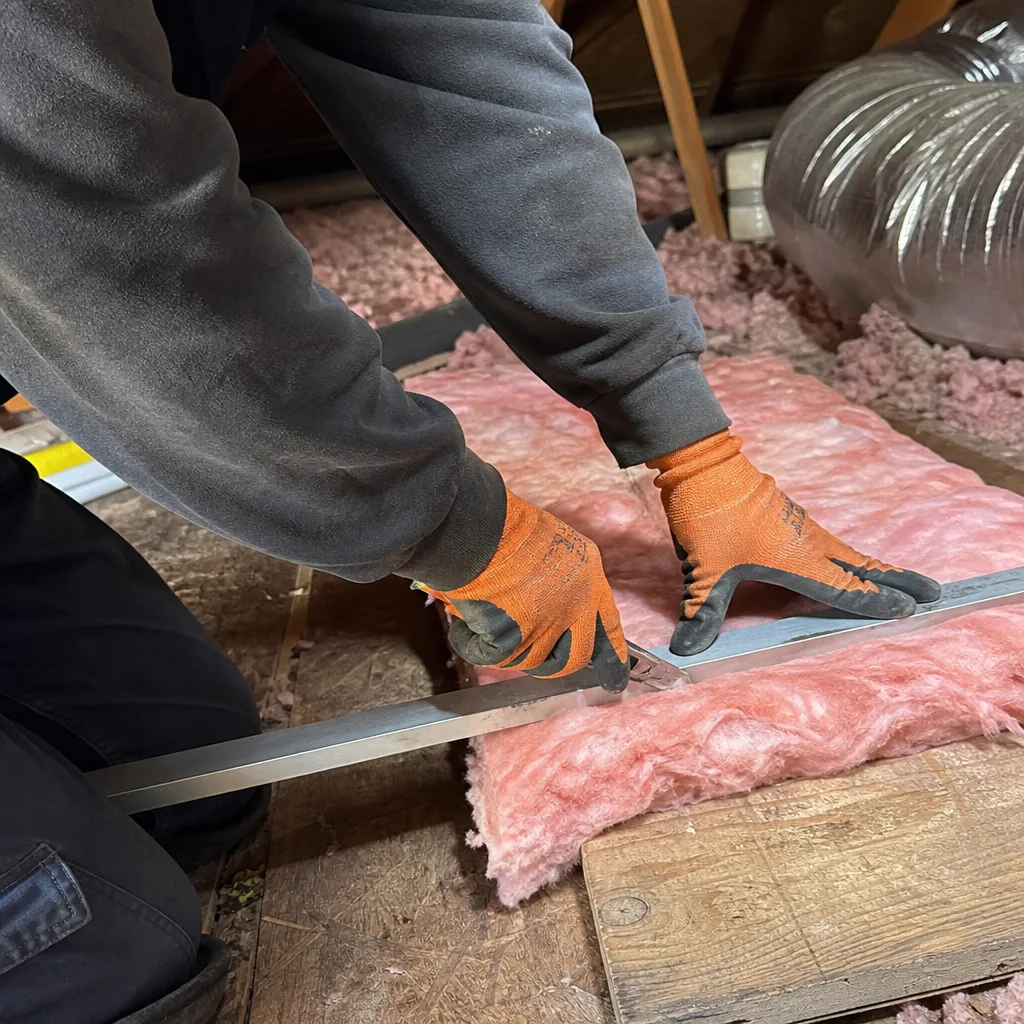
Reflectix Insulation in Long Beach, CA | Summit Insulation Long Beach
Reflectix service in Long Beach means something different here than it does ten miles inland. We’re an independent Reflectix installer and repair specialist, not a manufacturer-authorized dealer, and the work we do in Long Beach is shaped by one thing most contractors miss: port air eats foil. If you need Reflectix assessed, repaired, or installed right in Long Beach, call (562) 784-9031 for a free estimate.
Why Long Beach Residents Choose Us for Reflectix Service
We’ve pulled Reflectix out of attics in Wrigley, Bixby Knolls, and California Heights for years, and also handle Reflectix in Carson, and the failure patterns here are predictable once you understand the marine layer and the port. Nate Calloway, our owner and lead installer, grew up in Wrigley about a mile from the LA River and still lives ten minutes from where he was raised. He learned the trade after taking construction technology courses at Long Beach City College in his early twenties, and he’s spent nearly two decades doing attic retrofits and crawlspace work across this city. That means the person quoting your Reflectix job is the same person installing it, and the person installing it has seen what Long Beach humidity does to foil tape. We stock common Reflectix lines locally so we’re not waiting on a distributor in Commerce when your attic is already torn apart. Do it right the first time or you’ll be doing it twice: that’s the standard we work to, and it’s why we don’t patch delaminated foil or cover up moisture problems with new material.
Common Reflectix Insulation Problems We Solve in Long Beach
Here’s what actually goes wrong with Reflectix in this city, and why it goes wrong here specifically:
- Foil delamination at staple lines. Long Beach’s persistent marine layer and morning fog drive humidity in attics much higher than inland contractors expect. We see Reflectix Double Reflective barrier peeling away from its bubble core along staple lines in attics from California Heights to the coast, because the staples become corrosion points and the humidity does the rest. Once delamination covers more than 20% of a bay, we recommend replacing that section rather than taping it back together.
- Conductive short-circuits from missing air gaps. Reflectix radiant barrier only performs when there’s a 3/4-inch air gap between the foil and the surface it faces. In tight bungalow attics, which Long Beach has thousands of, homeowners and less experienced installers staple the foil directly against roof sheathing. That eliminates the air gap and turns the product into a conductor, not a reflector. We fix this by re-installing with proper spacer strips.
- Tearing at plumbing vent flanges. Long Beach’s 1920s and 1940s homes have old framing that shifts subtly with seismic activity and thermal cycling. That movement tears Reflectix at flange cutouts around plumbing vents and bracing, and once the foil tears, moisture and heat get through. We see this constantly in Wrigley and Bixby Knolls homes that haven’t been retrofitted in decades.
- Soot-driven reflectivity loss. This is the Long Beach-specific failure mode. In West Long Beach and along the 710 corridor, diesel particulate from port truck traffic and ship exhaust settles on horizontal Reflectix attic floor applications and kills the reflectivity within 18 to 24 months. The foil still looks shiny from a distance, but up close it’s covered in a fine gray film. A simple wipe-down restores performance, and we include that check on annual maintenance visits for port-adjacent ZIP codes.
- UV degradation at ridge-vent edges. Spanish Revival homes with low-slope roofs are gorgeous, but their eaves don’t shed water and sunlight the way steeper roofs do. Reflectix exposed at ridge-vent edges in these homes degrades from UV exposure faster than a homeowner would expect. Inadequate overlap during installation compounds the problem. We’ve replaced those edge sections enough times to know exactly how much overlap Long Beach’s coastal sun demands.
Reflectix Service in Long Beach: What Local Conditions Mean for Your Equipment
Here’s a fact you won’t find on a generic Reflectix page: the Port of Long Beach’s diesel particulate load measurably reduces radiant barrier reflectivity within 18 to 24 months in homes west of the 710, far faster than in Lakewood or Torrance. That’s not a guess. It’s what our crews observe every time we open an attic in West Long Beach that was insulated two years ago. The foil is coated in a film of port soot that settles through ridge vents, gable vents, and any unsealed penetration. This changes how we approach Reflectix work in Long Beach. We don’t just install the barrier and disappear. We include a foil-facing wipe-down and an emissivity spot check on every annual maintenance visit for port-adjacent ZIP codes, because the product’s performance here depends on ongoing maintenance that a contractor in Bellflower or Whittier would never think to recommend. If your attic faces the port, your Reflectix is working against conditions that no installation manual accounts for.
In a California Heights Craftsman, our crew pulled back a frayed Reflectix Double Reflective barrier from the attic floor that had lost most of its shine due to years of port soot. After vacuuming and installing a new barrier with proper 1×2 spacer strips at the eaves, the upstairs bedrooms dropped six degrees during the next July heat wave. That’s not a product failure. That’s a maintenance failure, and it’s the most common one we correct in Long Beach.
Reflectix Models & Products We Service in Long Beach
We install and service the full Reflectix lineup: Double Reflective Insulation (R-6.5 radiant barrier), Single Reflective Insulation (R-3.5), Radiant Barrier Foil (Low-E), and Foil-Bubble-Foil Duct Wrap. For new installations, we source material direct from authorized distributors, not secondhand or surplus stock. For retrofit repairs, we use OEM-specified foil tapes and accessories, but we adapt staple schedules and air-gap details to Long Beach’s historic district sill-and-joist framing. That’s a real technical distinction: a generic Reflectix installer staples to a modern truss spacing, while we account for the wider, irregular joist bays in a 1930s California Heights bungalow. For more on our broader Reflectix sales & service capabilities across all product lines, that page covers the full scope.
Reflectix Service Pricing in Long Beach
Reflectix installation in Long Beach typically runs $1.50 to $3.25 per square foot for material and labor, depending on the product line and the attic configuration. A full attic radiant barrier in a 1,200-square-foot bungalow usually lands between $1,800 and $3,900. Foil delamination repair or section replacement runs $250 to $600 for most attics, while a soot wipe-down and reflectivity check as part of an annual maintenance visit costs $125 to $200. The big cost driver in Long Beach is access: attics in 1920s and 1930s homes have tight entries, low headroom, and irregular joist spacing, which adds labor time. Every estimate we give is free and includes a written scope of work. Call (562) 784-9031 and we’ll walk your attic with you and tell you exactly what your Reflectix needs and what it doesn’t.
Serving Long Beach, CA — Our Local Coverage Area
We’re based in the Long Beach area and know this community well. Use the map below to see our service coverage — if you’re nearby, we can almost certainly help.
FAQs — Reflectix Insulation in Long Beach
No. Reflectix radiant barrier is not a standalone insulation product in any climate, and Long Beach’s mild coastal weather doesn’t change that. It reflects radiant heat, which helps in summer when the sun beats on your roof deck, but it provides almost no resistance to conductive heat transfer. In a Long Beach home you still need Attic Insulation — Long Beach with proper R-30 to R-38 in the attic under Title 24 Climate Zone 8 requirements, with the Reflectix barrier installed above it as a heat-rejection layer. We use it as a complement to batts or blown-in, never as a replacement for them.
It is not safe to install Reflectix over live knob-and-tube wiring. Knob-and-tube systems run hot, and foil is conductive. Installing a foil-faced product directly over exposed wiring creates a fire hazard and will fail inspection. In Long Beach bungalows with knob-and-tube, the correct sequence is to have the wiring evaluated, remediate where necessary, then install insulation. We will not install Reflectix or any other conductive product over live knob-and-tube, and we’ll tell you that before you spend a dollar with us.
Reflectix itself will not stop air infiltration from port pollution. It’s a radiant barrier, not an air barrier. What it does is give you a smooth, wipeable surface that makes the soot accumulation visible and cleanable, rather than contaminating your insulation. The real fix for port air in Long Beach is air sealing: closing off the penetrations, gaps, and vent leaks that let diesel particulate in. We pair Reflectix installation with attic air sealing for this reason. If you live west of the 710 and you’re seeing gray dust on your attic foil, call (562) 784-9031 and we’ll assess both the barrier and the air-sealing work your home needs.
Spanish Revival roofs in Long Beach create a condensation problem most installers ignore. With low slope and limited attic ventilation, moisture from the marine layer gets trapped above the foil if there isn’t an air gap. We install Reflectix with a minimum 3/4-inch airspace between the foil and the roof sheathing, using spacer strips or furring strips to maintain that gap. This allows airflow to carry moisture away before it condenses against the foil surface. In homes with inadequate ventilation, we recommend adding passive or mechanical ventilation as part of the radiant barrier scope. It’s a detail work that matters in coastal climate zones like Long Beach far more than inland.
No, and this is one of the most common mistakes we see in Long Beach attics. Installing Reflectix directly over existing insulation does not meaningfully boost R-value and creates problems: dust and debris settle on the upward-facing foil surface and kill its reflectivity within a year, particularly near the port. The correct placement for Reflectix in a vented attic is on the underside of the roof rafters or at the ceiling joist level below the roof, where the foil faces an air gap. If your attic floor insulation is old, contaminated, or compressed, replacing or topping it up is usually the better investment. Call (562) 784-9031 for a free attic assessment and we’ll tell you what your home actually needs.
Service Areas Near Long Beach
Our Reflectix service covers Long Beach and the surrounding communities. We work throughout Long Beach service area, including Wrigley, California Heights, Bixby Knolls, and West Long Beach. We also serve Reflectix service in Lakewood, Signal Hill, Bellflower, and Reflectix service in Commerce for commercial and residential attics alike.
Book Your Reflectix Service in Long Beach Today
If your Reflectix is delaminating, soot-coated, or just not performing the way it should in a Long Beach attic, we can help. Call (562) 784-9031 for a free estimate. We schedule same-week service across Long Beach and Lomita Reflectix service, and port-adjacent maintenance visits can often be booked within days.
Written by Nate Calloway, Owner & Lead Installer at Summit Insulation Long Beach, serving Long Beach since 2005.